

7 Best Exposure Management Tools in 2026
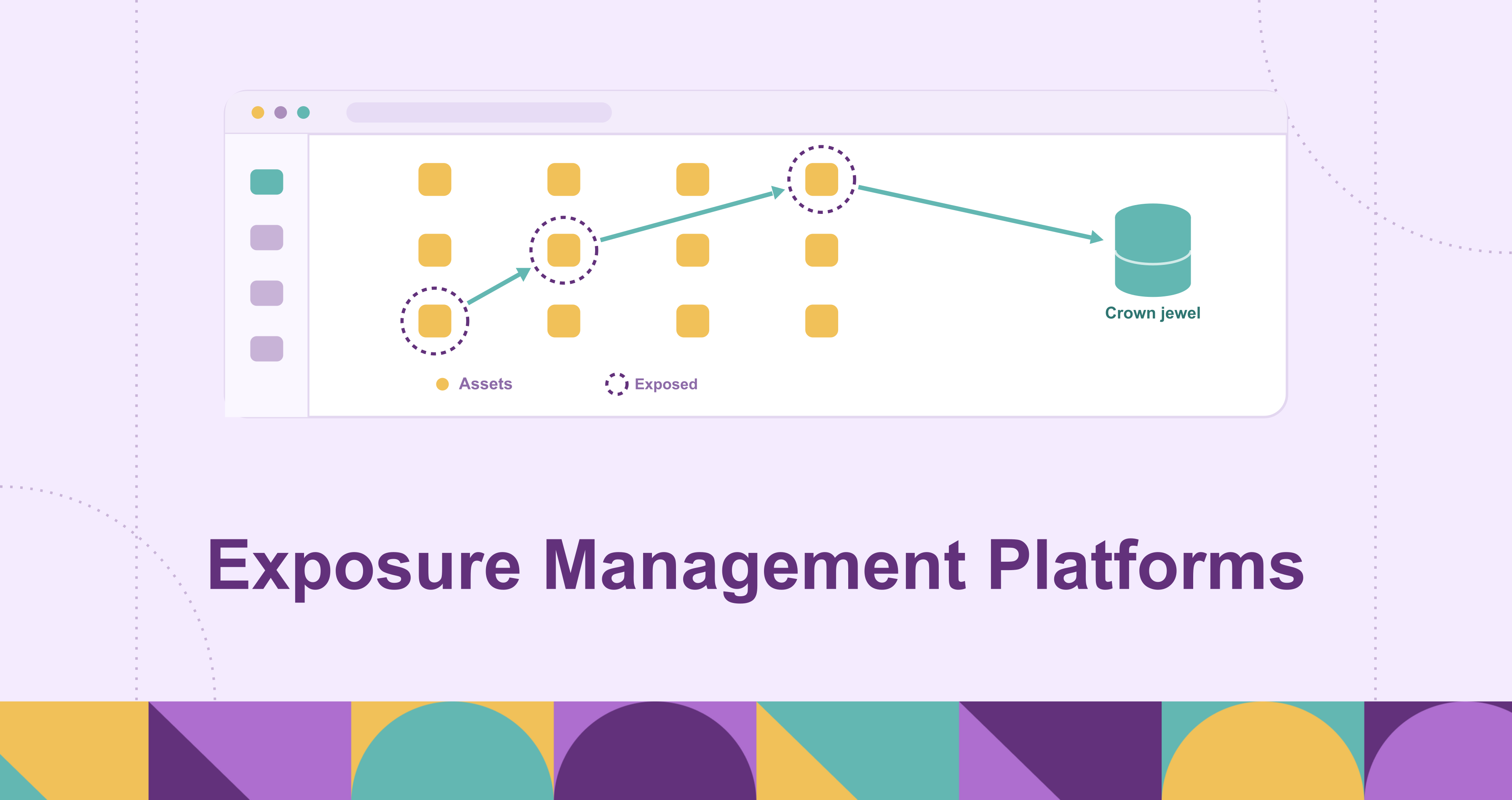
The hard problem in security is no longer finding vulnerabilities. Scanners are good at that, and they are too good: a modern environment produces more exposures than any team could ever remediate, across vulnerabilities, cloud misconfigurations, weak identities, and an internet-facing surface that keeps expanding. The platforms that matter in 2026 are the ones that answer a different question. Not “what is exposed,” but “which of these exposures can an attacker actually reach and chain into a path to something that matters, and therefore which should we fix first.” Exposure management is the shift from counting CVEs to ranking real risk.
This post walks through seven exposure management platforms worth knowing in 2026, chosen to span the category rather than repeat one corner of it: broad unified platforms, endpoint-led and cloud-led tools, the vulnerability-management incumbents, and an attack-path specialist. For each, it covers what the platform discovers, how it prioritizes, whether it does native attack-path analysis, its cloud and identity coverage, and one honest limitation. It then looks at the problem every program hits once these tools are in place, connecting their separate findings into the paths that cross them, and closes with how to choose.
What are exposure management tools?
An exposure management tool continuously discovers an organization’s assets and exposures across its environment, then prioritizes them by real-world risk and helps drive remediation. The scope is broader than a vulnerability scanner’s. An exposure is anything an attacker could use: an unpatched CVE, a misconfigured cloud resource, an over-privileged or stale identity, an exposed service on the public internet, or a combination of those that is dangerous only when they line up. The platform’s job is to find all of it across IT, cloud, identity, and increasingly OT, and then turn a long list into a short, ranked set of things worth doing.
Most platforms now position themselves against Gartner’s continuous threat exposure management (CTEM) framework, a program structured as five recurring stages: scoping the attack surface that matters to the business, discovering the assets and exposures in it, prioritizing them by exploitability and impact, validating that the dangerous ones are genuinely reachable, and mobilizing the fix. CTEM is a program, not a product. The tools below operationalize different parts of it, and few do all five stages equally well.
It helps to place exposure management against its two neighbors. Vulnerability management is narrower: it centers on known CVEs and their patch status, while exposure management adds misconfigurations, identity, attack paths, and business context on top. Attack surface management (ASM, including its cyber-asset and external-facing variants, CAASM and EASM) is the discovery input, the part that finds and inventories what you have, not the whole program that prioritizes and acts on it. Exposure management is the umbrella that pulls these together and adds the decision layer.
Why organizations need exposure management tools
Exposure volume has outpaced any team’s capacity to fix it. More than 40,000 CVEs were published in 2024, up roughly 38% from the year before, a record that pushed the National Vulnerability Database itself into a backlog. Add cloud misconfigurations and identity exposures to raw CVEs and the total an organization faces is far larger still. No team patches all of it. The constraint is not detection, which is largely solved, but deciding what to fix first, and that decision is exactly what exposure management platforms compete on.
The attack surface is hybrid and fragmented. Workloads run across on-premises systems, several public clouds, SaaS, short-lived containers, and the identities that tie them together. Each surface produces its own exposures in its own format, and an organization that cannot see them in one place ends up prioritizing each silo against itself rather than against the whole. A critical-looking issue in one tool may be unreachable, while a medium-looking one in another sits directly on the path to a crown-jewel asset.
Attackers chain exposures that look harmless in isolation. Real intrusions rarely turn on a single critical vulnerability. They string together a medium-severity bug on a reachable host, an over-permissioned identity on that host, and a network path from there to sensitive data. Each link scores as unremarkable on its own, so per-issue severity ranking, the CVSS-score-sorted spreadsheet, misses the combination entirely. The exposure that matters is the path, and seeing the path requires reasoning about how exposures relate, not just how severe each one is.
The payoff is measured at the program level, not the scan level. When Gartner introduced the CTEM framework, it predicted in 2022 that organizations running a continuous exposure management program would be three times less likely to suffer a breach by 2026. The prediction has been widely cited and, as of early 2026, not yet formally validated, so it is worth reading as a directional bet on prioritization rather than a measured result. The underlying logic holds regardless: a program that consistently fixes the exposures attackers would actually use beats one that burns its remediation budget on whatever scored highest this week. The value of these platforms is less in finding more and more in deciding what to fix first.
Key features to look for in exposure management tools
The dimensions below are the ones that separate platforms in this category. They are also the columns of the comparison table further down and the spine of every tool entry, so it is worth being precise about what each means.
Asset and exposure visibility. The foundation is unified discovery: a single, continuously updated inventory of assets and their exposures across IT, cloud, identity, and OT, ideally combining internal discovery (CAASM) with an external, attacker’s-eye view (EASM). A platform that cannot see an asset cannot protect it, and the blind spots tend to be exactly where risk hides, the unmanaged host, the forgotten cloud account, the shadow SaaS app.
Risk-based prioritization. Raw CVSS severity is a poor ranking signal because it ignores whether an exposure is exploitable and whether it sits anywhere near anything important. The platforms that earn their place add exploitability signals (exploit availability, EPSS-style probability, active exploitation in the wild) and business context (asset criticality, data sensitivity) to produce a score that reflects real risk rather than theoretical severity. Vendor names for this vary (VPR, TruRisk, and others), but the idea is the same: rank by likelihood times impact, not by severity alone.
Attack path analysis. The highest-value capability in the category is modeling how individual exposures chain into a path toward a critical asset, and then identifying the choke points that, if fixed, break the most paths at once. This is what turns a list of thousands of findings into a handful of high-leverage fixes. Not every platform does it natively, and the depth varies widely between those that do.
Cloud security coverage. Cloud exposure is its own discipline. Cloud-native platforms (the CNAPP category) reason about misconfigurations, exposed storage, workload vulnerabilities, and the cloud IAM relationships that connect them, often agentlessly through provider APIs. Any exposure program with meaningful cloud footprint needs depth here, whether from a dedicated cloud tool or a broad platform’s cloud module.
Identity exposure. Identity is now a primary attack surface in its own right. Over-privileged accounts, stale access, unused service principals, and the lateral movement they enable are exposures that no host scanner will surface. The stronger platforms map identity into the same model as everything else, so an over-privileged identity shows up as part of an attack path, not as a separate report.
Remediation and mobilization. Finding and ranking exposures is only useful if something gets fixed. The closing dimension is how well a platform routes work to owners, integrates with ticketing and SOAR, tracks remediation against SLAs, and validates that a fix actually closed the path rather than just changing a status field. The CTEM literature calls this mobilization, and it is where many programs stall.
No single platform leads on all six. The next two sections make that concrete: first the methodology behind the list, then the platforms themselves.
How we evaluated the best exposure management tools
Every tool on this list is a genuine, commercially available exposure management platform, verified against its own product documentation rather than described from marketing copy. We evaluated each against the six dimensions above (visibility, risk-based prioritization, attack path analysis, cloud coverage, identity exposure, and remediation), plus three practical factors: deployment model (agent, agentless, or SaaS), integration breadth with the rest of a security stack, and market traction in the category.
The list is deliberately spread across the sub-types of the category rather than stacked with near-identical products. It includes a broad unified platform, an endpoint-led entrant, a CAASM-led offering, a vulnerability-management incumbent extended into exposure, an attack-path specialist, and a cloud-native platform. The point is an honest survey of how different vendors approach the same problem, not a ranking that crowns one winner. Each entry names what the platform is genuinely best at and one limitation worth knowing before committing, because every tool here trades breadth against depth somewhere. Where two products overlap (several do attack-path analysis, several touch cloud), the entries call out how their approaches differ rather than pretending the overlap away.
Comparison table: best exposure management tools
A side-by-side view of the seven, on the dimensions that most often decide a shortlist. The entries that follow expand each row.
The table makes the category’s shape obvious: no row is strong in every column. Each platform leads on a different axis, which is why the right choice depends less on which is best overall and more on where your own program is weakest.
7 top exposure management tools
The seven below span the sub-categories of exposure management. Each entry reads against the same six dimensions, with the platform’s strongest axis and one honest limitation called out.
1. Tenable One
Tenable One is the broad, category-defining exposure management platform, built on Tenable’s long vulnerability-management lineage and extended to unify vulnerability, cloud, identity, OT, and web-application exposure in one view. It discovers assets and exposures across those surfaces, then prioritizes with the Vulnerability Priority Rating (VPR), which weighs exploitability and threat intelligence rather than raw CVSS, and includes attack-path analysis that traces how exposures connect toward critical assets. The breadth is the point: it aims to be the single place a program scopes, discovers, and prioritizes across a mixed estate.
Best for: organizations that want one unified exposure platform spanning IT, cloud, identity, and OT rather than stitching point tools together. Limitation: that breadth carries cost and a heavier rollout, and getting full value generally means adopting much of the Tenable suite, so teams using only part of it see a narrower slice of the platform’s strength.
2. Microsoft Security Exposure Management
Microsoft Security Exposure Management unifies exposure data from across the Microsoft Defender portfolio and connected third-party sources into a single attack-surface map, with attack-path analysis and critical-asset context built in. For organizations already on Defender and Entra, much of the underlying telemetry is being produced, so the platform can correlate device, identity, and cloud exposure into paths without standing up a separate data pipeline. It surfaces the exposures that sit on routes to high-value assets and frames remediation around breaking those paths.
Best for: Microsoft-centric estates that want exposure management drawing on signals they already generate. Limitation: the value is highest inside the Microsoft ecosystem and thins out across heterogeneous, non-Microsoft environments, where third-party connectors carry more of the load and coverage depends on how completely they are wired in.
3. CrowdStrike Falcon Exposure Management
CrowdStrike Falcon Exposure Management brings exposure management onto the single Falcon agent, pairing asset and vulnerability visibility with risk prioritization in the same platform that runs CrowdStrike’s endpoint detection and response. The single-agent model means an organization already running Falcon can turn on exposure visibility without deploying new infrastructure, and exposure context sits directly beside detection data, which is useful when an exposed asset is also one generating alerts. Prioritization draws on CrowdStrike’s threat intelligence to weight what attackers are actively exploiting.
Best for: teams standardized on Falcon that want exposure context living next to their detection and response stack. Limitation: coverage is strongest where the Falcon agent is deployed, so unmanaged assets and external-facing surface depend on the platform’s newer agentless discovery, which is less mature than the agent-anchored core.
4. Rapid7 Exposure Command
Rapid7 Exposure Command is a hybrid exposure management offering built on top of Rapid7’s Surface Command, which combines cyber-asset attack surface management (CAASM) and external attack surface management (EASM) into one inventory. Exposure Command layers high-fidelity environment detail and threat-aware risk context onto that visibility, so teams can move from a 360-degree view of internal and external surface to a prioritized set of exposures attackers are most likely to use. The emphasis is on closing the visibility gap first, then ranking what the unified view reveals.
Best for: teams that want broad internal-and-external attack-surface visibility coupled with prioritization in one place. Limitation: it is a relatively new unified offering assembled from Rapid7’s portfolio, so depth varies by how much of the Command suite an organization adopts, and the prioritization is strongest once the underlying surface data is complete.
5. Qualys Enterprise TruRisk Platform
The Qualys Enterprise TruRisk Platform extends Qualys’s long vulnerability- and compliance-management heritage into exposure management, aggregating exposures from across its sensors and scoring them with TruRisk, which blends severity, exploitability, and business impact into a single risk rating. For organizations with an established Qualys vulnerability-management practice, it is the natural path to risk-based prioritization: the scanning and asset data are already there, and TruRisk reframes that data from a patch backlog into a ranked risk register.
Best for: organizations with a Qualys vulnerability-management foundation that want to move from CVE counts to risk-based prioritization without changing vendors. Limitation: the platform’s strength is rooted in vulnerability scanning, so its cloud and identity attack-path depth is less developed than in tools built path-first, and full coverage of cloud and identity exposure leans on additional modules.
6. XM Cyber
XM Cyber is the attack-path specialist of the group. Rather than lead with discovery breadth, it continuously models how exposures chain into attack paths across on-premises and cloud environments, and ranks the choke points, the single fixes that sever the largest number of paths to critical assets. This is the validation-and-prioritization core of CTEM expressed as a product: it answers not just which exposures exist but which ones actually lie on a route an attacker could walk to something that matters, and where the highest-leverage remediation is.
Best for: teams that want attack-path-led prioritization and exposure validation, focusing remediation effort on the choke points that matter most. Limitation: its focus is path analysis and validation rather than broad scanning, so it complements rather than replaces the discovery and vulnerability tools that feed it the exposure data it reasons over.
7. Wiz
Wiz is a cloud-native exposure platform (a CNAPP) built around an agentless, graph-based model of the cloud. It connects to cloud accounts through read-only APIs, with no agents to deploy, and builds a Security Graph of every resource, identity, workload, and finding, then surfaces the toxic combinations where individually minor issues line up into a real attack path. The canonical example is a workload that carries a known vulnerability, is publicly exposed, and has an over-privileged IAM role attached: each finding is a medium on its own, but together they are a critical cloud attack path, and the graph is what makes that combination visible.
Best for: cloud-first and multi-cloud organizations that want deep, agentless visibility into cloud and cloud-identity exposure with prioritization built around attack paths. Limitation: the platform is cloud-focused by design, so on-premises systems, endpoints, and OT exposure need a complementary tool, and an organization with a large non-cloud footprint will not get a complete picture from Wiz alone.
Connecting exposures into attack paths
Each platform above discovers and prioritizes within its own data, and several reason about attack paths inside their own model. Wiz builds a Security Graph of the cloud; XM Cyber models paths across the environment it scans; Microsoft connects Defender signals into routes toward critical assets. Graph thinking, in other words, is already where the value in exposure management concentrates, because the exposure that matters is rarely a single finding and almost always a path. The open problem is that each platform’s graph stops at the edge of its own data.
A real attacker path does not respect those boundaries. It might begin at a cloud misconfiguration surfaced by your CNAPP, run through an over-privileged identity flagged by your identity tool, and land on a vulnerable on-premises host tracked by your vulnerability scanner. No single platform sees that whole path, because no single platform holds all three pieces of data. Stitching them together is a relationship problem across data that already lives somewhere in your environment: asset inventory in a CMDB or warehouse, vulnerability findings in one system, identity and access in another, cloud configuration in a third. Asking “what could an attacker reach if they landed here, crossing whatever tool produced each link” is a multi-hop traversal across all of it, the kind of question that is awkward as a pile of SQL joins but natural as a path through a graph.
This is a different category of tool from the seven above, not an eighth exposure scanner. PuppyGraph is a graph query engine that runs directly on the tables you already have, in a data warehouse, lake, or open table format such as Iceberg, with no ETL into a separate graph database. You define a graph schema over the existing asset, vulnerability, identity, and cloud-configuration tables that your exposure platforms and other tools already populate, and then traverse them as a query. A security engineer can ask, in openCypher, for the path from an exposed asset to the critical systems an attacker could reach through an over-privileged identity:
MATCH (e:Exposure {status: 'open'})-[:ON_ASSET]->(a:Asset)<-[:CAN_ACCESS]-(i:Identity)
MATCH (i)-[:HAS_PRIVILEGE]->(:Role)-[:GRANTS_ACCESS_TO]->(t:Asset)
WHERE t.criticality = 'crown_jewel'
RETURN e, a, i, collect(t) AS reachable_crown_jewels
Because PuppyGraph queries the existing tables in place rather than ingesting a copy, the exposure graph stays current with the data the tools are writing, and the compute layer is separate from where the data lives. It speaks openCypher and Gremlin, and ships standard graph algorithms (shortest path, connectivity, and centrality among them) that map directly onto attack-path questions like which node sits on the most paths to a crown-jewel asset, the same choke-point analysis the dedicated platforms perform inside their own data. The point is not to replace any of the exposure platforms but to sit over their combined output and connect it, turning findings scattered across separate tools into the cross-tool paths that none of them can see alone. PuppyGraph is used in security programs at companies including Palo Alto Networks, Datadog, and Netskope.
Conclusion
Exposure management in 2026 is a prioritization discipline, not a scan-count contest. The seven platforms here are strong on different axes: Tenable One and Microsoft for breadth across a unified estate, CrowdStrike for teams anchored on its agent, Rapid7 and Qualys for attack-surface visibility and vulnerability-rooted risk scoring, XM Cyber for attack-path-led prioritization, and Wiz for deep cloud and cloud-identity exposure. The right shortlist is the one that strengthens wherever your program is weakest, whether that is discovery, prioritization, cloud, identity, or path analysis. Most mature programs run more than one of these, and the question that follows is how to connect what they each find into the paths an attacker would actually take across them.
If you want to see what that cross-tool path analysis looks like on your own data, the forever-free PuppyGraph Developer Edition lets you define a graph over your existing asset, vulnerability, and identity tables and trace attack paths across them in openCypher, with no graph-specific ETL. When you want to work through how a graph layer fits alongside the exposure platforms you already run, book a demo with the team.

Sa Wang is a Software Engineer with exceptional mathematical ability and strong coding skills. He holds a Bachelor's degree in Computer Science and a Master's degree in Philosophy from Fudan University, where he specialized in Mathematical Logic.


