


AI Security: Protecting AI Models

Artificial intelligence (AI) is transforming how organizations operate, enabling automation, data-driven decision-making, and new forms of innovation across industries. As AI systems become increasingly embedded in critical business processes, they also introduce unique security challenges that extend beyond traditional cybersecurity concerns. Protecting AI models, data, infrastructure, and applications has therefore become a strategic priority for modern enterprises.
AI security encompasses the technologies, processes, and governance practices designed to safeguard AI systems from unauthorized access, manipulation, and cyber threats. From data poisoning and adversarial attacks to model theft and prompt injection, organizations face a rapidly evolving threat landscape. Understanding these risks and implementing comprehensive security controls are essential to maintaining trust, reliability, and resilience in AI-driven environments.
What Is AI Security?
AI security refers to the processes, technologies, controls, and governance practices used to protect artificial intelligence systems from unauthorized access, manipulation, misuse, and cyberattacks. It encompasses the security of machine learning models, training data, inference environments, AI infrastructure, and the broader AI development lifecycle.
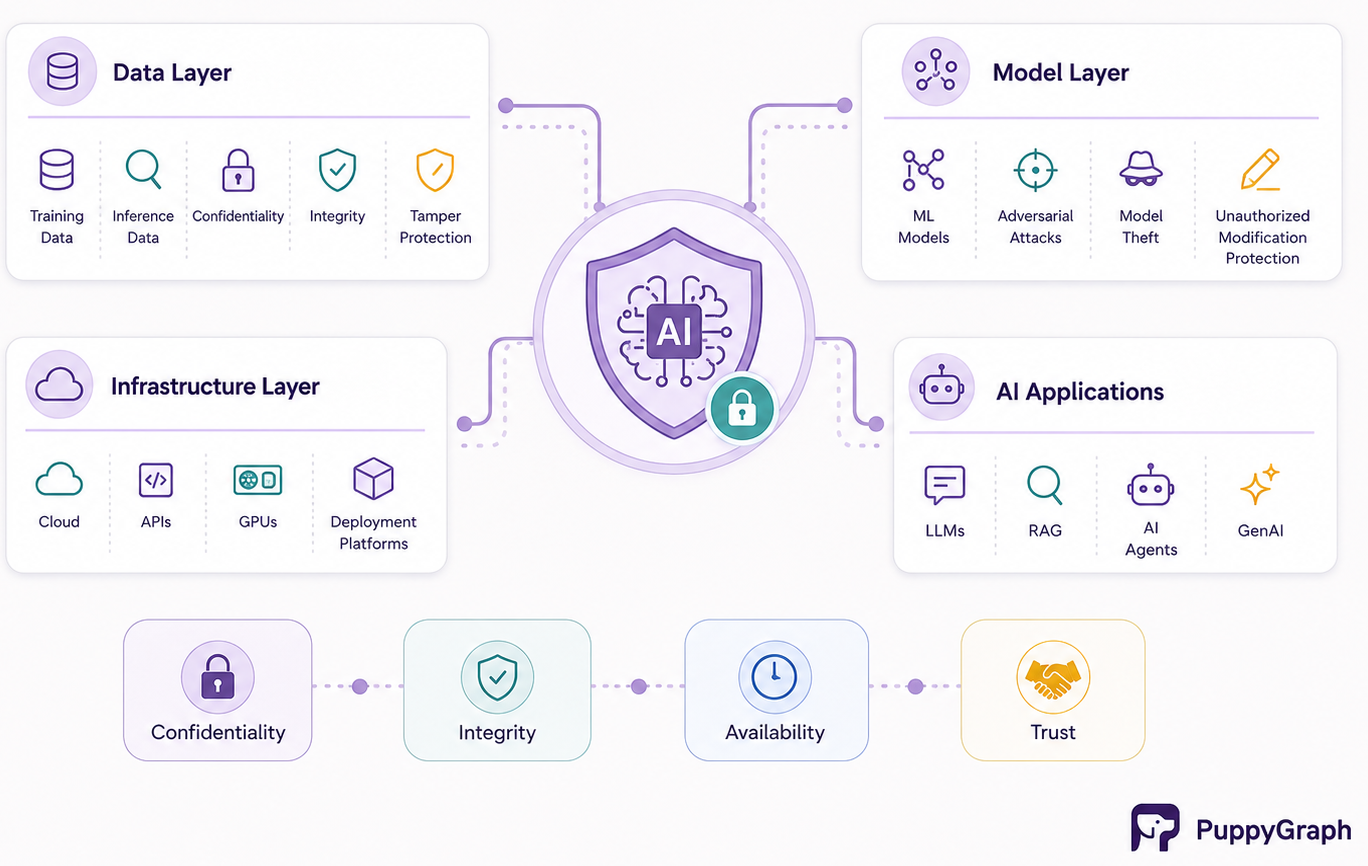
Unlike traditional software applications, AI systems rely heavily on data and probabilistic decision-making. Their behavior is influenced not only by code but also by training datasets, model architectures, and continuous learning mechanisms. This creates unique security concerns that require specialized protections.
AI security addresses risks across multiple layers. At the data layer, organizations must ensure training and inference data remain accurate, confidential, and free from tampering. At the model layer, security measures protect against theft, adversarial attacks, and unauthorized modifications. At the infrastructure layer, organizations secure cloud environments, APIs, GPUs, and deployment platforms.
Modern AI security also includes safeguarding large language models (LLMs), retrieval-augmented generation (RAG) systems, AI agents, and generative AI applications. As these technologies become deeply integrated into business operations, maintaining their security becomes essential for organizational resilience.
Core Objectives of AI Security
The primary goals of AI security align with broader cybersecurity principles while accounting for AI-specific risks. Organizations seek to preserve the confidentiality of sensitive data, ensure the integrity of models and outputs, maintain system availability, and establish trust in AI-generated decisions.
Additionally, AI security aims to prevent malicious manipulation of model behavior. Since AI systems often influence business decisions, customer interactions, and automated workflows, protecting model reliability is as important as protecting infrastructure itself.
Why AI Security Matters in the Enterprise
Enterprise AI adoption has accelerated dramatically in recent years. Organizations now use AI to automate customer service, optimize supply chains, detect fraud, generate content, and improve operational efficiency. As AI becomes embedded within mission-critical processes, security failures can have significant business consequences.
A compromised AI system may produce inaccurate predictions, expose confidential information, or make harmful recommendations. For example, an attacker who manipulates a fraud detection model could enable fraudulent transactions to bypass security controls. Similarly, data leakage from a generative AI platform could expose intellectual property or customer records.
The financial impact of AI-related incidents can be substantial. Organizations may face regulatory penalties, legal liabilities, and loss of customer trust. In industries such as healthcare, finance, and critical infrastructure, compromised AI systems can even affect public safety.
AI security also supports business continuity. Reliable AI systems enable organizations to innovate confidently while maintaining operational stability. Security controls help ensure that AI-generated insights remain trustworthy and aligned with organizational objectives.
The Growing Attack Surface
The AI ecosystem extends beyond models themselves. Modern deployments involve cloud providers, open-source frameworks, APIs, vector databases, model repositories, and external data sources. Each component introduces potential vulnerabilities.
As enterprises adopt generative AI and AI agents, the attack surface expands further. Attackers increasingly target prompts, plugins, external integrations, and model interactions. Securing these interconnected systems requires a holistic approach that spans technology, people, and governance.
Understanding the AI Security Landscape
The AI security landscape is rapidly evolving as organizations deploy increasingly sophisticated models and threat actors develop more advanced attack techniques. Unlike traditional software systems, AI environments involve multiple interconnected components that each present unique risks.
The modern AI ecosystem typically includes data pipelines, training infrastructure, model repositories, deployment environments, APIs, monitoring systems, and end-user applications. Security must be integrated across all these components to provide comprehensive protection.
AI System Architecture
The following diagram illustrates a typical enterprise AI environment:
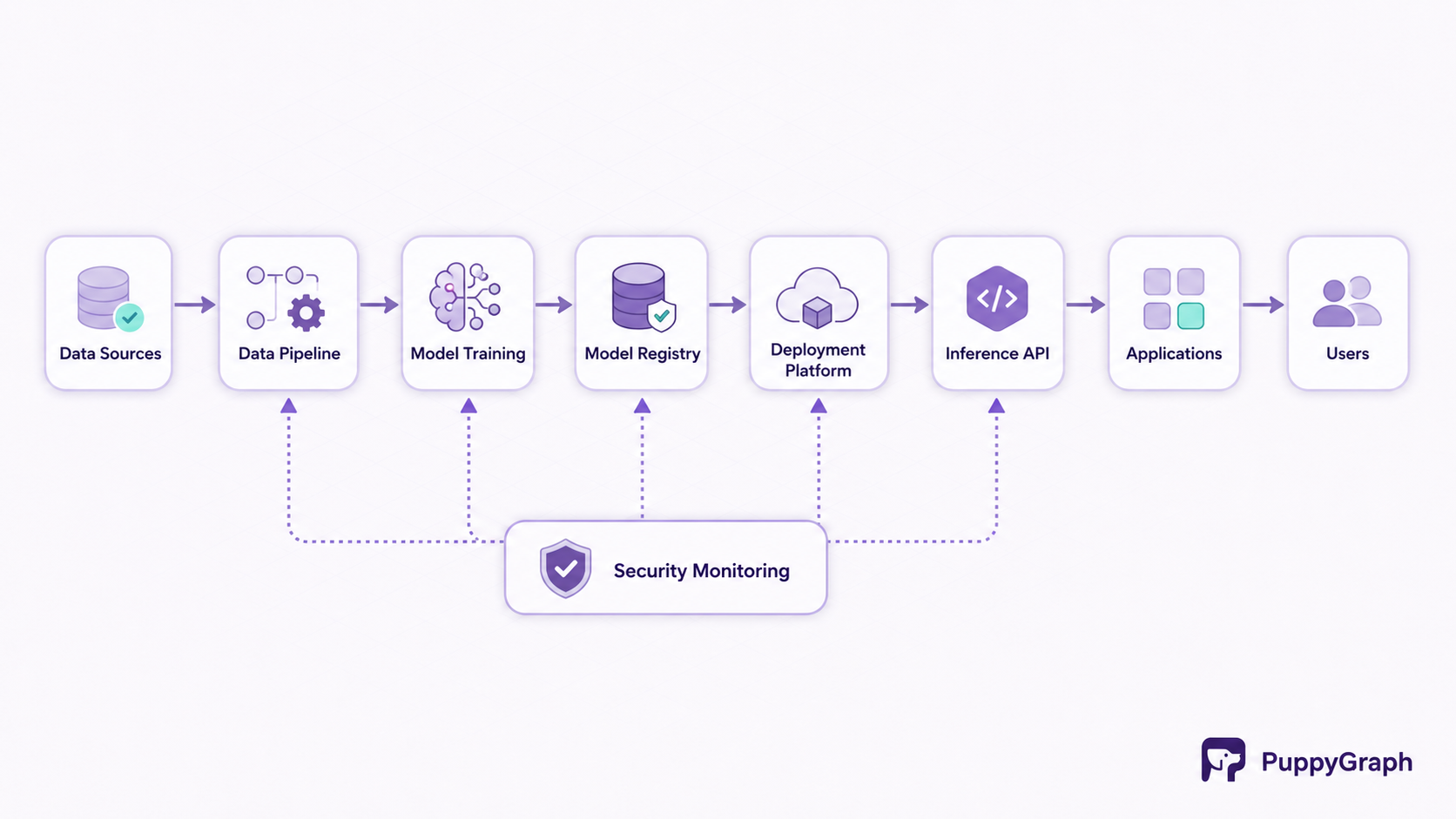
Each stage introduces specific security requirements. Data pipelines require integrity controls, training environments need secure access management, model registries must prevent unauthorized modifications, and inference APIs require authentication and monitoring.
Emerging AI Technologies
The rise of foundation models and generative AI has significantly changed the threat landscape. Organizations increasingly rely on third-party models, prompting concerns regarding supply chain security, model provenance, and dependency management.
AI agents represent another emerging challenge. These systems can autonomously interact with external applications and perform actions on behalf of users. While powerful, they create additional risks related to privilege escalation, prompt injection, and unintended behavior.
Key Components of an AI Security Strategy
An effective AI security strategy combines technical safeguards, governance processes, and organizational accountability. Security should be embedded throughout the AI lifecycle rather than treated as an afterthought.
Data Security
Data serves as the foundation of every AI system. Organizations must implement strong controls to protect training datasets, validation data, and inference inputs. Encryption, access controls, data classification, and monitoring help reduce the risk of unauthorized access and tampering.
Data quality management is equally important. Poisoned or manipulated datasets can compromise model performance and create security vulnerabilities. Regular validation processes help ensure data integrity throughout the lifecycle.
Model Security
Machine learning models represent valuable intellectual property and often contain significant business value. Organizations should protect models against theft, reverse engineering, and unauthorized modifications.
Security measures may include model encryption, access restrictions, secure storage, and digital signing. Monitoring mechanisms can help detect unusual behavior that may indicate model tampering or compromise.
Infrastructure Security
AI workloads often run in cloud environments using specialized hardware such as GPUs and AI accelerators. Infrastructure security involves securing compute resources, networks, storage systems, and deployment pipelines.
Zero-trust principles are increasingly relevant for AI environments. Organizations should continuously verify identities, limit privileges, and monitor access across all AI infrastructure components.
Monitoring and Incident Response
Continuous monitoring enables organizations to detect attacks, performance degradation, and abnormal model behavior. Security teams should integrate AI environments into broader security operations centers (SOCs) and incident response processes.
Effective monitoring includes logging model interactions, tracking inference patterns, and identifying anomalies that may indicate adversarial activity.
Common Threats to AI Systems
AI systems face both traditional cybersecurity threats and attacks specifically designed to exploit machine learning technologies. Understanding these risks is essential for building effective defenses.
Data Poisoning Attacks
Data poisoning occurs when attackers manipulate training datasets to influence model behavior. By introducing malicious or misleading examples, attackers can cause models to make incorrect predictions or behave unexpectedly.
These attacks are particularly dangerous because compromised models may appear normal during testing while exhibiting targeted vulnerabilities under specific conditions.
Adversarial Attacks
Adversarial attacks involve carefully crafted inputs designed to deceive machine learning models. Small modifications that are often imperceptible to humans can cause significant prediction errors.
For example, attackers may alter images, text prompts, or sensor data to manipulate model outputs. Such attacks are especially concerning in autonomous systems, fraud detection platforms, and security applications.
Model Theft
Training advanced AI models requires significant computational resources, expertise, and proprietary data. As a result, attackers may attempt to steal models through API abuse, insider threats, or unauthorized access.
Model theft can undermine competitive advantages and expose sensitive intellectual property. Organizations should implement rate limiting, authentication controls, and usage monitoring to mitigate these risks.
Prompt Injection Attacks
Prompt injection has become one of the most prominent threats to generative AI systems. Attackers manipulate prompts to bypass safety controls, extract sensitive information, or alter model behavior.
In AI applications connected to external tools and databases, prompt injection can lead to unauthorized actions or data exposure. Defending against these attacks requires robust input validation and contextual security controls.
Data Leakage
AI systems frequently process sensitive business and customer information. Misconfigured models, insecure APIs, or improper access controls can expose confidential data.
Large language models may inadvertently reveal proprietary information if training data is not properly managed. Organizations must implement strict governance around data usage and retention.
Securing AI Models Throughout the Lifecycle
AI security should be integrated into every phase of the machine learning lifecycle. Security-by-design principles help reduce risks before models reach production.
Development Phase
Security begins during model development. Organizations should use trusted datasets, secure coding practices, and controlled development environments. Developers must validate data sources and assess potential security implications before training begins.
Threat modeling can help identify risks early in the design process. Security teams should collaborate closely with data scientists to address vulnerabilities before deployment.
Training Phase
The training phase requires careful protection of datasets, compute resources, and model artifacts. Access controls should restrict who can modify training data and configurations.
Organizations should maintain audit trails for training activities and validate dataset integrity regularly. Reproducible training processes improve transparency and facilitate incident investigations.
Deployment Phase
Production deployments introduce new security considerations. APIs must be protected through authentication, authorization, and rate limiting mechanisms. Network segmentation and encryption further reduce exposure.
Container security, infrastructure hardening, and vulnerability management play important roles in securing deployed AI systems.
Operational Phase
Once deployed, AI models require continuous monitoring and maintenance. Organizations should track performance metrics, detect anomalies, and evaluate security events in real time.
Regular model reviews help identify drift, emerging vulnerabilities, and changes in threat conditions. Security controls should evolve alongside model updates and operational requirements.
AI Security vs Traditional Cybersecurity
While AI security shares many principles with traditional cybersecurity, significant differences exist. Traditional security primarily focuses on protecting software, networks, and infrastructure. AI security extends these concerns to data, models, and algorithmic behavior.
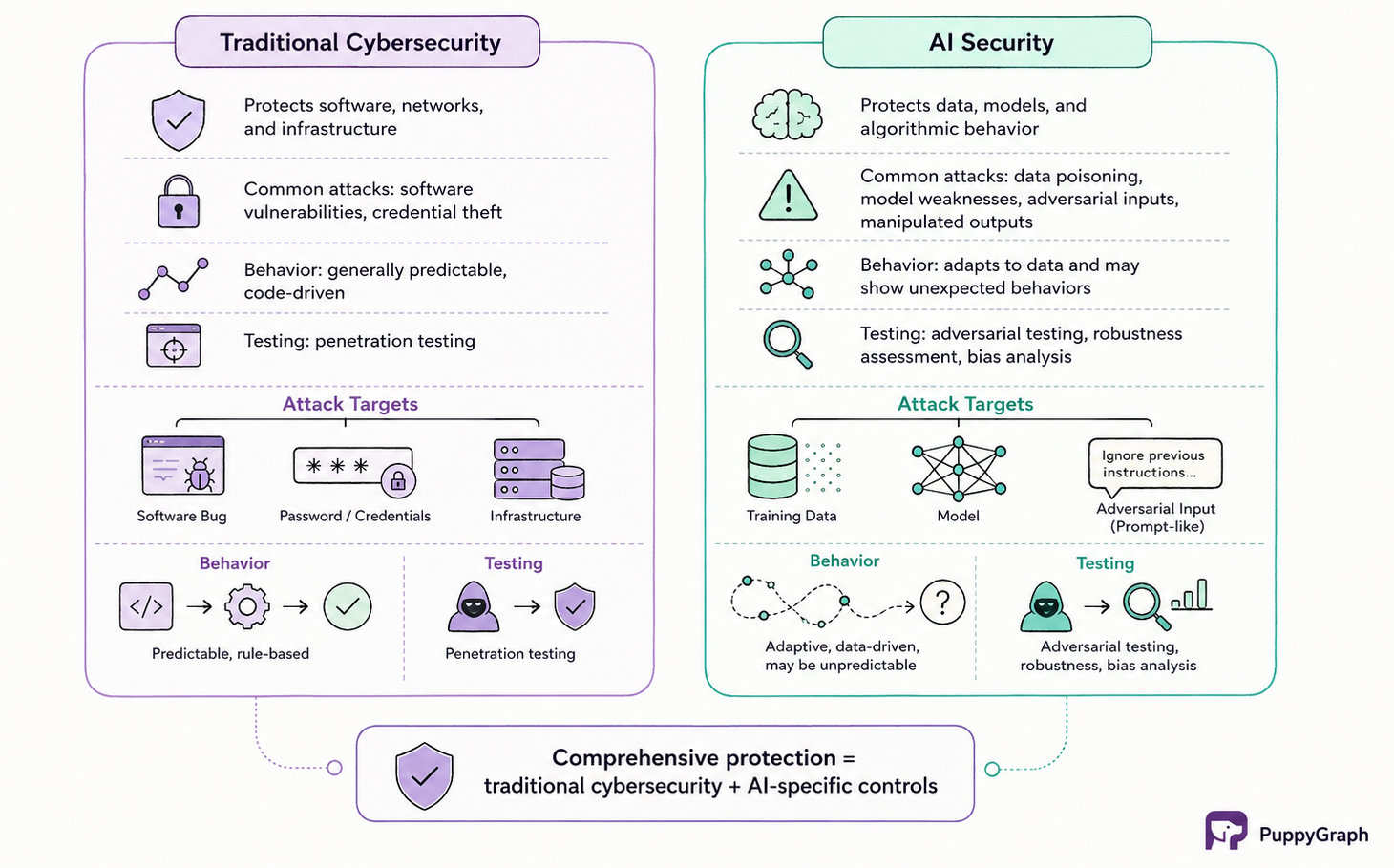
One major distinction involves attack targets. In conventional systems, attackers often exploit software vulnerabilities or credential theft. In AI systems, attackers may manipulate training data, exploit model weaknesses, or influence outputs through adversarial inputs.
Another difference is the dynamic nature of AI models. Traditional applications generally behave predictably based on code. AI systems adapt to data and may exhibit unexpected behaviors even when underlying software remains unchanged.
Security testing also differs significantly. Penetration testing remains important, but AI security requires additional evaluations such as adversarial testing, model robustness assessments, and bias analysis.
As AI becomes increasingly integrated with enterprise infrastructure, organizations must combine traditional cybersecurity practices with AI-specific controls to achieve comprehensive protection.
Governance, Risk, and Compliance for AI Security
Technical controls alone are insufficient for managing AI security risks. Organizations must establish governance frameworks that define responsibilities, policies, and oversight mechanisms.
AI governance provides the structure needed to ensure security, compliance, and ethical deployment. Effective governance aligns AI initiatives with organizational objectives while managing operational risks.
Risk Management
AI risk management involves identifying, assessing, and mitigating potential threats throughout the lifecycle. Organizations should conduct regular risk assessments and prioritize controls based on business impact.
Risk management processes should address security vulnerabilities, operational failures, regulatory obligations, and third-party dependencies.
Regulatory Considerations
Governments worldwide are introducing regulations governing AI development and deployment. Examples include the EU AI Act, NIST AI Risk Management Framework, and industry-specific compliance requirements.
Organizations must ensure that security controls support compliance objectives. Documentation, auditability, and transparency are becoming increasingly important for regulatory readiness.
Third-Party Risk
Many organizations rely on external AI vendors, foundation models, and cloud providers. Third-party dependencies introduce additional security and compliance risks.
Vendor assessments should evaluate security practices, data handling procedures, access controls, and incident response capabilities. Continuous monitoring helps ensure that third-party risks remain manageable over time.
AI Security Best Practices for Organizations
Organizations can strengthen their AI security posture by adopting a proactive and comprehensive approach. Effective security programs combine technology, governance, and employee awareness.
First, security should be integrated into AI development processes from the beginning. Building security into design, training, and deployment stages is significantly more effective than attempting to add protections later.
Second, organizations should implement strong identity and access management controls. Limiting access to datasets, models, and infrastructure reduces the likelihood of insider threats and unauthorized activities.
Third, continuous monitoring provides visibility into model behavior and emerging threats. Monitoring should include performance metrics, security logs, user interactions, and anomaly detection mechanisms.
Employee training is also critical. Data scientists, developers, and business users must understand AI-specific security risks and their responsibilities in maintaining secure environments.
Finally, organizations should conduct regular testing exercises. Adversarial simulations, red teaming activities, and security assessments help identify weaknesses before attackers can exploit them.
AI Security Frameworks and Standards
Industry frameworks provide structured guidance for implementing AI security programs. While no single standard addresses every scenario, several frameworks have emerged as influential references.
NIST AI Risk Management Framework
The National Institute of Standards and Technology (NIST) developed the AI Risk Management Framework to help organizations identify, assess, and manage AI-related risks. The framework emphasizes governance, trustworthiness, and continuous improvement.
It encourages organizations to evaluate AI systems across dimensions such as reliability, security, privacy, and accountability.
OWASP Top 10 for LLM Applications
The Open Worldwide Application Security Project (OWASP) has published guidance focused on large language model security. The framework highlights risks such as prompt injection, insecure output handling, training data poisoning, and excessive agency.
This guidance has become particularly relevant for organizations deploying generative AI applications and AI agents.
ISO Standards
The International Organization for Standardization (ISO) continues to develop standards related to AI governance, security, and risk management. These standards provide globally recognized best practices that support regulatory compliance and operational consistency.
MITRE ATLAS
MITRE ATLAS offers a knowledge base of adversarial threats against AI systems. Security teams use it to understand attacker techniques, develop defenses, and improve threat modeling efforts.
Together, these frameworks help organizations build mature AI security programs that align with industry expectations and emerging regulations.
Beyond Model Security: Adding Semantic Controls to AI Systems
Securing AI models, infrastructure, and data pipelines is essential, but it addresses only part of the AI security challenge. As organizations deploy large language models, AI assistants, and autonomous agents across enterprise environments, a new risk emerges: ensuring that AI systems understand and interact with data correctly.
Many enterprise security incidents are not caused by unauthorized access alone. They arise when AI systems misinterpret data relationships, combine information incorrectly, or generate actions that violate business logic. Even when access controls are properly configured, AI systems operating across complex datasets can produce inaccurate conclusions or unsafe actions if they lack an understanding of the underlying business context.
This challenge is particularly evident in enterprise data environments. Organizations often store information across relational databases, data warehouses, data lakes, and operational systems. While these platforms provide strong security controls and governance mechanisms, they typically describe how data is stored rather than what the data actually means from a business perspective. For AI systems, this semantic gap can become a significant security and reliability risk.
The Role of a Semantic Layer
A semantic layer sits above existing data systems and exposes business concepts directly, such as Customer, Account, Transaction, Device, or Employee. Instead of forcing applications or AI systems to reason through raw tables, schemas, and joins, the semantic layer provides a higher-level logical model aligned with business meaning.
This allows developers and AI agents to work with enterprise data more naturally while maintaining consistency with organizational rules and policies, without requiring changes to underlying databases or storage platforms.
Ontology and Ontology Enforcement
At the core of many semantic layers is an ontology, a formal definition of entities, relationships, and rules across the enterprise data environment.
An ontology defines:
- what entities exist,
- how they relate to one another,
- what relationships are valid, and
- what operations are permitted within the business domain.
For example, a Customer may own an Account, an Account may initiate a Transaction, and an Employee may approve that transaction under specific conditions.
Ontology enforcement ensures that queries, analyses, and AI-generated actions respect these rules. Whether data access originates from an application, an analyst, or an AI agent, operations can be validated against the semantic model to prevent inconsistent, misleading, or logically invalid outcomes.
Why It Matters: From Security Controls to Semantic Trust
Traditional security controls focus on who can access data and whether systems remain protected from unauthorized activity. However, they do not necessarily ensure that AI systems use data correctly once access is granted.
For AI applications, this challenge is increasingly important. Large language models and autonomous agents often operate across diverse enterprise datasets where schemas, naming conventions, and relationships may vary significantly. As a result, AI systems can become trapped in semantic ambiguity, generating outputs that are technically valid but business-wise incorrect.
An AI agent may successfully retrieve information, construct a query, or trigger an action while misunderstanding the real-world relationships between entities. Such errors may not appear as security violations, yet they can still lead to operational risks, compliance issues, or incorrect business decisions.
Ontology enforcement provides a semantic guardrail for AI systems. By validating interactions against an explicit business model, organizations can reduce the risk of inaccurate reasoning, unauthorized logical relationships, and unintended actions.
It also creates a valuable feedback mechanism. Rather than returning only technical errors, ontology-aware systems can provide structured semantic feedback that explains why an operation violates business rules. This enables AI systems to improve through iterative correction while helping organizations maintain greater trust in automated decision-making. Over time, this feedback can also serve as a training signal for fine-tuning or reinforcement learning, helping AI systems better align with the rules, relationships, and operational constraints of the enterprise data environment.
Data Access with AI Assistants
Moving beyond traditional data access methods, PuppyGraph provides a graph-based approach for connecting and querying existing enterprise data without requiring organizations to migrate information into a native graph database.
By transforming existing data into an ontology-driven graph representation, PuppyGraph enables developers, analysts, and AI systems to explore connected knowledge through relationship-aware reasoning and retrieval.
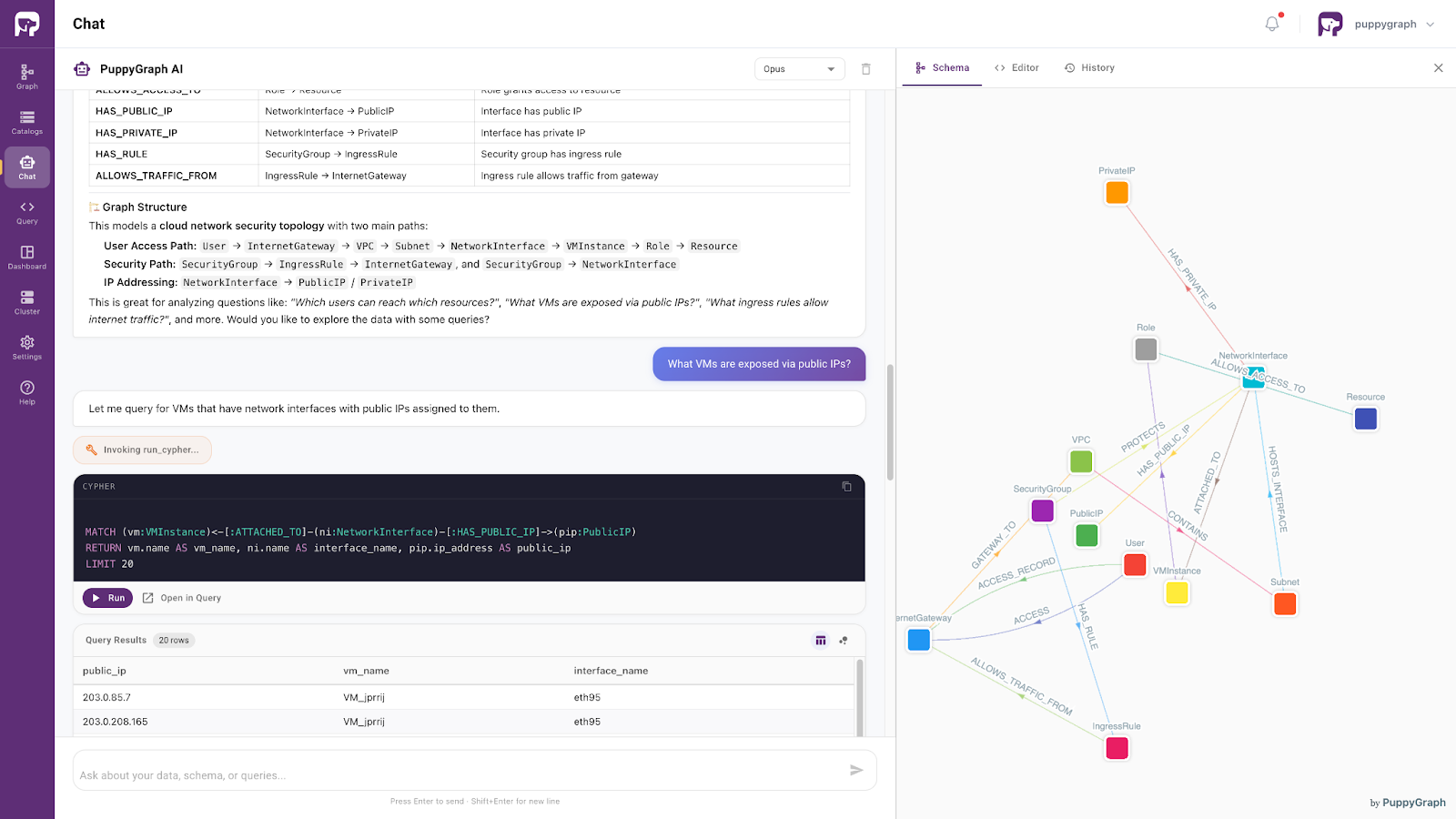
Powered by the same ontology-enforced foundation, this approach enables more secure and context-aware interactions between AI systems and enterprise data. AI assistants can interpret user intent within a well-defined semantic framework, retrieve information with greater accuracy, and operate according to established business rules.
As organizations increasingly rely on AI-driven workflows, semantic governance becomes an important complement to traditional AI security controls. Together, they help transform enterprise data from a collection of isolated records into a trusted knowledge layer that supports secure, explainable, and reliable AI applications.
Conclusion
Artificial intelligence is rapidly becoming a core component of enterprise operations, creating new opportunities for automation, innovation, and data-driven decision-making. However, the growing adoption of AI also introduces unique security challenges that extend beyond traditional cybersecurity. Organizations must protect AI systems throughout their lifecycle by securing data, models, infrastructure, and applications against threats such as data poisoning, adversarial attacks, model theft, prompt injection, and data leakage. Effective AI security therefore requires a combination of technical controls, governance frameworks, continuous monitoring, and risk management practices.
As AI systems become more autonomous and deeply integrated with enterprise data, security must also address semantic accuracy and trustworthy decision-making. Ontology-based semantic layers and ontology enforcement provide an additional safeguard by ensuring AI systems operate within defined business rules and relationships. By combining traditional AI security measures with semantic governance, organizations can build more secure, reliable, and explainable AI environments that support long-term business resilience and responsible innovation.
Explore the forever-free PuppyGraph Developer Edition, or book a demo to see how ontology-driven graph retrieval and semantic governance can help secure and scale enterprise AI applications.

Hao Wu is a Software Engineer with a strong foundation in computer science and algorithms. He earned his Bachelor’s degree in Computer Science from Fudan University and a Master’s degree from George Washington University, where he focused on graph databases.

Get started with PuppyGraph!


Developer Edition
- Forever free
- Single noded
- Designed for proving your ideas
- Available via Docker install
Enterprise Edition
- 30-day free trial with full features
- Everything in developer edition & enterprise features
- Designed for production
- Available via AWS AMI & Docker install