


What Is Fraud Analytics? How Does it Work?
Fraud has become one of the most significant threats facing modern organizations. As businesses increasingly rely on digital transactions, online services, and interconnected systems, fraudsters continue to develop more sophisticated methods to exploit vulnerabilities. Traditional fraud detection approaches that depend on manual reviews and predefined rules often struggle to keep pace with evolving fraud schemes. This challenge has led organizations to adopt more advanced analytical techniques capable of identifying suspicious activities before substantial losses occur.
Fraud analytics combines data analysis, statistical modeling, artificial intelligence, and machine learning to detect, prevent, and investigate fraudulent behavior. By analyzing large volumes of structured and unstructured data, organizations can identify hidden patterns, unusual behaviors, and emerging threats in real time. Today, fraud analytics plays a critical role across industries such as banking, insurance, healthcare, telecommunications, e-commerce, and government services. Understanding how fraud analytics works can help organizations strengthen security, improve operational efficiency, and maintain regulatory compliance.
What Is Fraud Analytics?
Fraud analytics refers to the systematic use of data analysis techniques and technologies to identify, assess, and prevent fraudulent activities. It involves collecting data from multiple sources, analyzing transactions and behaviors, and applying analytical models to detect anomalies that may indicate fraud. Unlike traditional fraud detection systems that rely solely on fixed rules, fraud analytics continuously learns from historical and real-time data to improve accuracy over time.
Organizations use fraud analytics to uncover both known and previously unknown fraud patterns. The process goes beyond identifying suspicious transactions. It also examines customer behavior, device information, network relationships, geographic locations, and transaction histories to create a comprehensive picture of potential risk. This broader perspective enables investigators to detect fraud schemes that might otherwise remain hidden.
Fraud analytics supports multiple business objectives. It helps reduce financial losses, improve customer trust, protect brand reputation, and ensure compliance with industry regulations. By leveraging advanced technologies, organizations can respond more quickly to emerging threats while minimizing disruptions to legitimate customers and operations.
Key Components of Fraud Analytics
Several components work together within a fraud analytics framework. Data integration combines information from internal databases, external sources, transaction systems, and customer interactions. Analytical engines process this data using statistical models and machine learning algorithms. Visualization tools help investigators understand patterns and relationships, while alerting systems notify teams when suspicious activities are detected.
The effectiveness of fraud analytics depends on the quality and completeness of available data. Organizations that maintain comprehensive, accurate datasets are generally better positioned to identify fraudulent behavior before significant damage occurs.
How Fraud Analytics Works
Fraud analytics follows a structured process that transforms raw data into actionable intelligence. The process begins with data collection and continues through analysis, risk assessment, alert generation, and investigation. Modern fraud detection systems operate continuously, enabling organizations to monitor activities across multiple channels and respond rapidly to emerging threats.
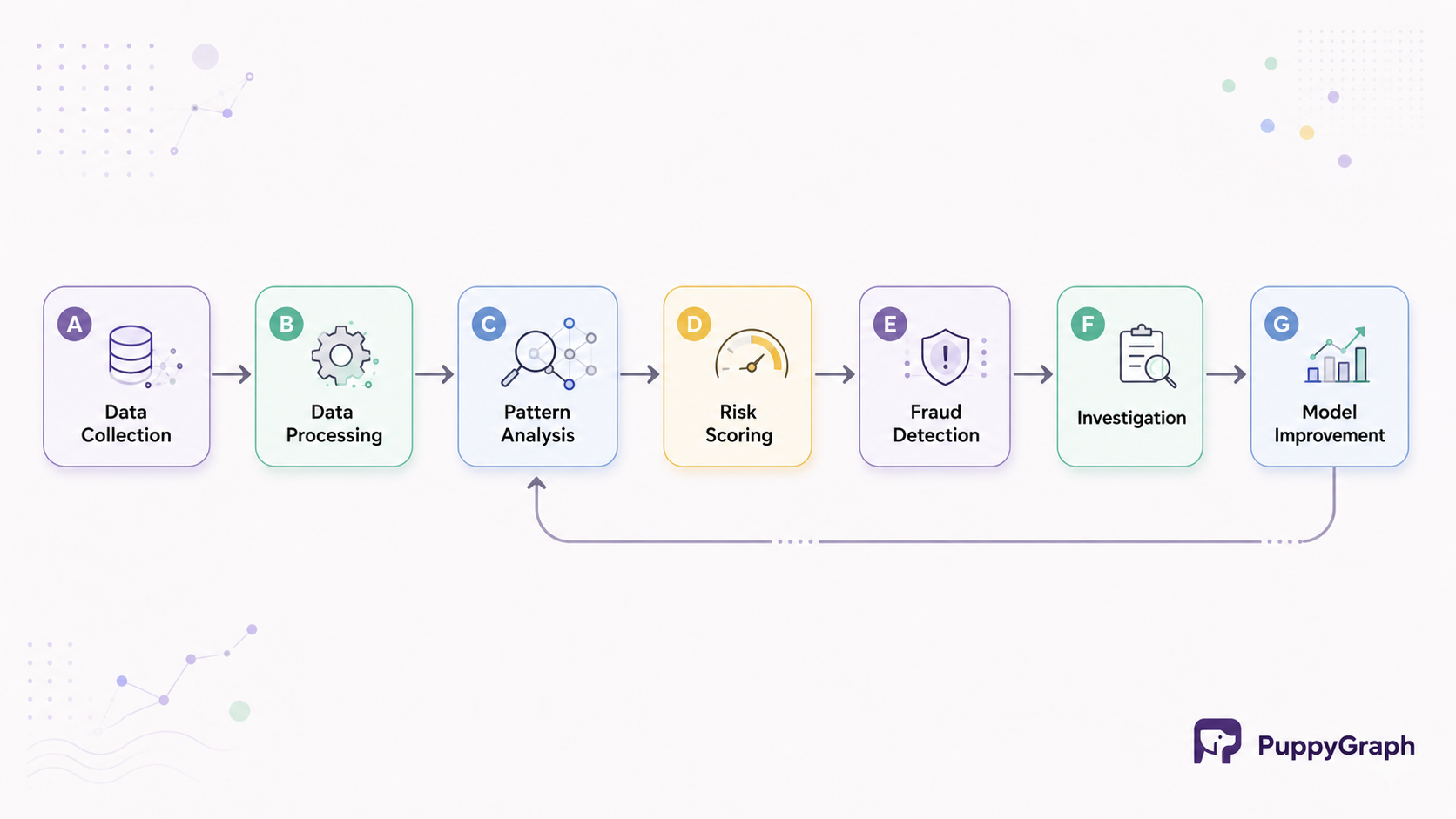
The first step involves gathering data from various sources. These may include transaction records, customer profiles, login activities, payment histories, device fingerprints, IP addresses, social networks, and third-party databases. By consolidating these datasets into a unified environment, organizations create a richer context for analysis.
Once data has been collected, it undergoes cleaning and normalization. This stage ensures consistency across different systems and removes duplicate or incomplete records. Data quality plays a critical role because inaccurate information can lead to false positives or missed fraud indicators. Effective preprocessing improves the reliability of downstream analytical processes.
After preparation, analytical models examine the data to identify unusual patterns and anomalies. These models compare current activities against historical behavior and established risk indicators. For example, a sudden increase in transaction volume, multiple failed login attempts, or purchases originating from unusual locations may trigger further analysis.
The system then assigns risk scores to transactions, users, or accounts. Risk scoring combines multiple variables to estimate the likelihood of fraud. High-risk activities generate alerts that investigators can review. Some organizations use automated workflows that immediately block suspicious transactions when risk thresholds are exceeded, reducing potential losses before fraud can occur.
Fraud analytics systems continuously improve through feedback loops. When investigators confirm fraud cases, the system incorporates those outcomes into future analyses. This process enables machine learning models to adapt to changing fraud tactics and maintain effectiveness over time.
Common Types of Fraud Detected Using Fraud Analytics
Fraud analytics can detect a wide range of fraudulent activities across industries. Different fraud schemes exhibit unique characteristics, but most generate patterns that can be identified through data analysis. Organizations rely on fraud analytics to uncover both individual incidents and organized criminal operations.
Financial transaction fraud remains one of the most common applications. Banks and payment processors analyze transaction data to identify unauthorized credit card usage, account takeovers, and money laundering activities. Suspicious spending patterns, unusual transaction locations, and abnormal transaction frequencies often serve as warning signs.
Identity fraud has also become increasingly prevalent in digital environments. Criminals may use stolen personal information to open accounts, obtain loans, or conduct fraudulent transactions. Fraud analytics examines customer identities, device characteristics, and behavioral patterns to distinguish legitimate users from imposters. Advanced systems can detect subtle inconsistencies that traditional verification methods might overlook.
Insurance companies use fraud analytics to identify fraudulent claims. By analyzing claims histories, policyholder behavior, medical records, and external data sources, insurers can uncover exaggerated damages, staged accidents, and organized fraud rings. These insights help reduce unnecessary payouts and improve operational efficiency.
Healthcare fraud presents another major challenge. Fraud analytics assists healthcare organizations in detecting billing irregularities, duplicate claims, prescription abuse, and provider misconduct. By examining large volumes of healthcare data, organizations can identify patterns that indicate fraudulent activity while maintaining compliance with regulatory requirements.
E-commerce businesses increasingly rely on fraud analytics to combat payment fraud, account abuse, refund fraud, and fake reviews. Real-time monitoring enables online retailers to identify suspicious customer behavior and prevent fraudulent transactions without disrupting legitimate purchases. This balance is critical for maintaining customer satisfaction while reducing risk exposure.
Real-Time Fraud Detection Explained
Real-time fraud detection represents one of the most important advancements in modern fraud prevention. Traditional fraud investigations often occurred after fraudulent activities had already caused financial losses. Real-time systems, however, evaluate transactions and behaviors as they occur, allowing organizations to intervene before fraud is completed.
The effectiveness of real-time detection depends on speed and accuracy. Modern fraud analytics platforms process thousands or even millions of transactions per second. Advanced algorithms analyze incoming data streams, compare activities against risk models, and generate immediate decisions. This rapid analysis enables organizations to block suspicious transactions within milliseconds.
Real-time fraud detection relies heavily on behavioral analysis. Instead of evaluating transactions in isolation, the system examines how activities compare to normal user behavior. For example, if a customer typically shops within one geographic region but suddenly initiates multiple transactions from another country, the system may identify elevated risk. Contextual analysis improves detection accuracy while reducing false alarms.
Another critical aspect involves adaptive risk assessment. Fraudsters continuously modify their techniques to avoid detection. Real-time analytics platforms update risk models dynamically based on new intelligence, enabling organizations to respond to emerging threats more effectively. This adaptability is essential in industries where fraud tactics evolve rapidly.
Organizations benefit significantly from real-time fraud detection because it minimizes financial losses, protects customer accounts, and reduces investigation costs. Customers also gain confidence knowing that suspicious activities are identified and addressed immediately. As digital transactions continue to increase, real-time monitoring has become a fundamental requirement for effective fraud prevention.
Example of Real-Time Detection Workflow
A customer initiates an online payment using a previously unseen device. The fraud analytics platform immediately evaluates device characteristics, transaction amount, location data, and historical behavior. If the activity aligns with normal patterns, the transaction proceeds. If multiple risk indicators appear simultaneously, the system may request additional authentication or temporarily block the transaction pending review.
Role of AI and Machine Learning in Fraud Analytics
Artificial intelligence and machine learning have transformed fraud analytics by enabling systems to identify complex patterns that traditional rule-based approaches often miss. As fraud schemes become increasingly sophisticated, organizations require technologies capable of adapting to changing threats without constant manual intervention.
Machine learning models learn from historical data to distinguish between legitimate and fraudulent activities. Rather than relying solely on predefined rules, these models identify subtle relationships among variables that may indicate fraud. Over time, they improve detection accuracy by incorporating feedback from investigations and newly discovered fraud cases.
Supervised learning is commonly used when historical fraud examples are available. Models are trained using labeled datasets containing both fraudulent and legitimate activities. Once trained, the system can predict fraud risk for new transactions based on similarities to known patterns. This approach is particularly effective for detecting recurring fraud schemes.
Unsupervised learning addresses situations where fraud patterns are unknown or constantly evolving. These models identify anomalies by examining deviations from normal behavior. Because they do not require labeled examples, unsupervised methods can uncover emerging fraud tactics that have not previously been documented.
Behavioral analytics represents another important AI application. By analyzing user interactions, navigation patterns, typing speed, mouse movements, and transaction habits, organizations can develop behavioral profiles for legitimate users. Significant deviations from these profiles may indicate account compromise or fraudulent activity.
Natural language processing also contributes to fraud analytics by analyzing unstructured data such as emails, customer communications, claim descriptions, and social media content. These capabilities provide additional context for investigations and improve the identification of suspicious activities that may not be visible through structured transaction data alone.
Benefits of Fraud Analytics
Fraud analytics delivers substantial benefits that extend beyond simple fraud detection. Organizations that implement comprehensive fraud analytics programs often experience improvements in operational efficiency, customer experience, regulatory compliance, and risk management.
One of the most immediate benefits is reduced financial loss. Early detection enables organizations to stop fraudulent transactions before significant damage occurs. This proactive approach can save millions of dollars annually, particularly in industries with high transaction volumes and elevated fraud exposure.
Fraud analytics also improves investigation efficiency. Traditional investigations often require extensive manual review of transactions and records. Automated analytics systems prioritize high-risk cases, allowing investigators to focus their efforts where they are most needed. As a result, organizations can process cases more quickly while reducing operational costs.
Customer experience benefits as well. Excessive fraud prevention measures can create friction for legitimate users. Advanced analytics helps organizations distinguish genuine customers from potential fraudsters more accurately. This balance reduces unnecessary transaction declines and authentication requests while maintaining strong security controls.
Enhanced visibility represents another significant advantage. Fraud analytics platforms provide detailed insights into fraud trends, emerging threats, and organizational vulnerabilities. These insights support strategic decision-making and help organizations allocate resources more effectively. Over time, improved visibility contributes to stronger overall risk management practices.
Scalability is increasingly important as organizations generate larger volumes of data. Fraud analytics systems can process vast amounts of information efficiently, enabling businesses to maintain effective fraud prevention capabilities even as transaction volumes continue to grow. This scalability supports long-term business expansion without compromising security.
How Fraud Analytics Supports Regulatory Compliance
Regulatory compliance has become a major concern for organizations operating in highly regulated industries. Governments and regulatory bodies increasingly require businesses to implement effective fraud prevention, anti-money laundering, and risk management controls. Fraud analytics plays a central role in meeting these obligations.
Financial institutions, for example, must comply with regulations designed to prevent money laundering and financial crime. Fraud analytics helps identify suspicious transactions, monitor customer behavior, and generate reports required by regulatory authorities. Automated monitoring reduces the burden on compliance teams while improving detection effectiveness.
Fraud analytics also supports Know Your Customer (KYC) requirements. Organizations can verify customer identities, assess risk profiles, and monitor ongoing activities to ensure compliance with regulatory standards. Continuous monitoring enables institutions to identify changes in customer behavior that may warrant further investigation.
Healthcare organizations use fraud analytics to comply with regulations governing billing practices, patient privacy, and reimbursement programs. By identifying irregular claims and billing anomalies, healthcare providers can reduce compliance risks while improving operational integrity. These capabilities are particularly important in environments where fraudulent claims can result in significant penalties.
Audit readiness represents another compliance benefit. Fraud analytics platforms maintain detailed records of monitoring activities, investigations, and decision-making processes. This documentation provides valuable evidence during regulatory reviews and demonstrates an organization's commitment to fraud prevention and risk management.
As regulatory expectations continue to evolve, organizations increasingly view fraud analytics as an essential component of their compliance strategy. The ability to detect, investigate, and document suspicious activities helps reduce legal exposure while strengthening organizational governance frameworks.
Beyond Detection Models: Adding Semantics to Fraud Analytics
Advanced analytics, machine learning, and real-time monitoring have significantly improved organizations’ ability to detect fraudulent behavior. However, as fraud schemes become more sophisticated and interconnected, another challenge emerges: helping analytical systems understand how entities relate to one another, not just how individual events behave.
Many fraud analytics platforms already process enormous volumes of transaction records, customer profiles, device information, claims data, and behavioral signals. While these datasets contain valuable information, they are often stored across separate systems with schemas designed for operational efficiency rather than investigative reasoning. Transactions, accounts, devices, merchants, and individuals may be connected through complex relationships that are difficult to capture using isolated records alone.
As organizations increasingly deploy AI-powered investigation tools and autonomous agents, providing a clearer semantic understanding of these relationships becomes increasingly important. A semantic layer helps bridge this gap.
The Role of a Semantic Layer
A semantic layer sits above existing fraud analytics systems and exposes meaningful business entities directly, such as Customer, Account, Device, Transaction, Merchant, Claim, or Provider. Instead of forcing analysts or AI systems to interpret fragmented datasets and reconstruct relationships manually, the semantic layer presents a unified logical model aligned with how fraud investigations are conducted.
This allows investigators, developers, and AI agents to work with fraud data at the level of real-world entities and relationships rather than isolated records. Existing analytical systems remain unchanged, while the semantic layer provides a more intuitive and consistent view of the data.
Ontology and Ontology Enforcement
At the core of many semantic layers is an ontology, a formal definition of entities, relationships, and rules within the fraud detection environment.
An ontology defines:
- what entities exist,
- how they relate to one another,
- and what relationships are valid.
For example, a Customer may own an Account, an Account may initiate a Transaction, a Device may access multiple Accounts, and a Merchant may receive payments from those transactions. These relationships form the foundation for understanding complex fraud networks.
Ontology enforcement ensures that analytical processes, investigations, and AI-generated actions respect these rules. Whether data originates from operational systems, fraud analysts, or AI agents, interactions are validated against the semantic model to maintain consistency and prevent logically invalid conclusions.
Why It Matters: From Isolated Signals to Connected Intelligence
Traditional fraud detection often focuses on identifying suspicious individual events. While effective for many use cases, modern fraud schemes frequently involve coordinated networks of accounts, devices, identities, and transactions that may appear benign when viewed separately.
Without a semantic layer, investigators and AI systems must infer these relationships from disconnected datasets, increasing complexity and the risk of overlooking critical connections. An AI system may successfully identify anomalous transactions yet fail to recognize the broader fraud ring linking those transactions together.
Ontology enforcement acts as a semantic guardrail, ensuring that AI-generated analyses and investigative workflows operate within a validated model of how fraud-related entities interact. This helps reduce false associations, improves investigative accuracy, and increases confidence in automated decision-making.
It also creates an important feedback mechanism for AI systems. Rather than receiving only technical errors or incomplete results, ontology-aware platforms can provide structured semantic feedback explaining why certain conclusions or actions violate known business rules. This allows AI models and agents to refine their reasoning over time and better understand the fraud environment they operate within. Over the longer term, such semantic feedback may also serve as a reward signal for fine-tuning or reinforcement learning.
Relationship-Aware Fraud Investigation with Graph Analytics
Many of the most sophisticated fraud schemes are inherently relationship-driven. Fraud rings, money laundering networks, synthetic identity fraud, account takeover campaigns, and organized insurance fraud often involve complex interactions among multiple entities across multiple systems.
Graph-based approaches complement traditional fraud analytics by representing data as connected entities and relationships. This enables investigators and AI systems to explore hidden connections, identify suspicious communities, trace transaction flows, and uncover patterns that may remain invisible through conventional record-based analysis.
PuppyGraph provides a graph-based way to access and investigate fraud data as connected knowledge without requiring organizations to migrate data into a native graph database.
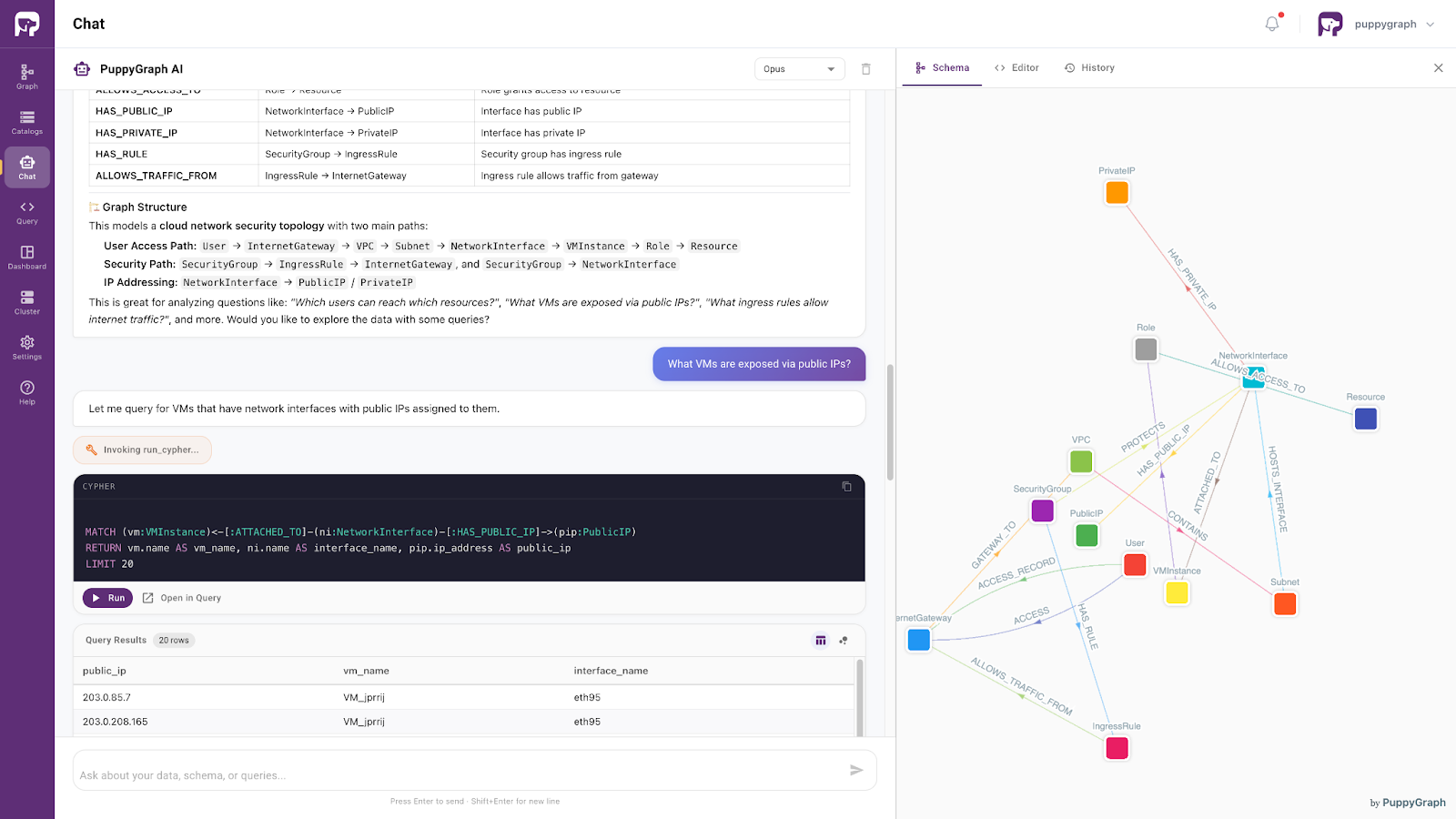
Powered by an ontology-enforced semantic foundation, graph analytics provides a relationship-aware view of fraud activity while preserving consistency across diverse data sources. AI systems can reason over connected data more effectively, interpret investigative context more accurately, and surface higher-quality insights for human analysts.
As fraud ecosystems continue to evolve, organizations increasingly require not only stronger detection models but also richer semantic understanding. By combining fraud analytics, AI, and graph-based reasoning, enterprises can transform fragmented fraud signals into connected intelligence, enabling faster investigations, more accurate decisions, and stronger protection against emerging threats.
Conclusion
Fraud analytics has become an essential capability for organizations seeking to combat increasingly sophisticated fraud schemes. By combining data analysis, machine learning, artificial intelligence, and real-time monitoring, businesses can identify suspicious activities earlier, reduce financial losses, improve operational efficiency, and strengthen regulatory compliance. As digital ecosystems continue to expand, the ability to detect and respond to fraud in real time will remain a critical competitive and security advantage.
Beyond improving detection accuracy, the future of fraud prevention depends on understanding the relationships that connect transactions, accounts, devices, identities, and organizations. Semantic layers, ontology enforcement, and graph-based analytics provide the contextual intelligence needed to uncover complex fraud networks and support AI-driven investigations. By combining advanced analytics with relationship-aware reasoning, organizations can transform fragmented data into actionable insights, enabling faster investigations, more confident decisions, and stronger protection against emerging fraud threats.
Explore the forever-free PuppyGraph Developer Edition, or book a demo to see how PuppyGraph enables AI-powered, relationship-aware fraud investigations through ontology-enforced graph analytics.

Hao Wu is a Software Engineer with a strong foundation in computer science and algorithms. He earned his Bachelor’s degree in Computer Science from Fudan University and a Master’s degree from George Washington University, where he focused on graph databases.

Get started with PuppyGraph!


Developer Edition
- Forever free
- Single noded
- Designed for proving your ideas
- Available via Docker install
Enterprise Edition
- 30-day free trial with full features
- Everything in developer edition & enterprise features
- Designed for production
- Available via AWS AMI & Docker install