Semantic Search Engine: How It Works & Examples
- Hao WuSoftware Engineer
The guide

Query your table as a graph.Petabytes. Subsecond. No data movement.
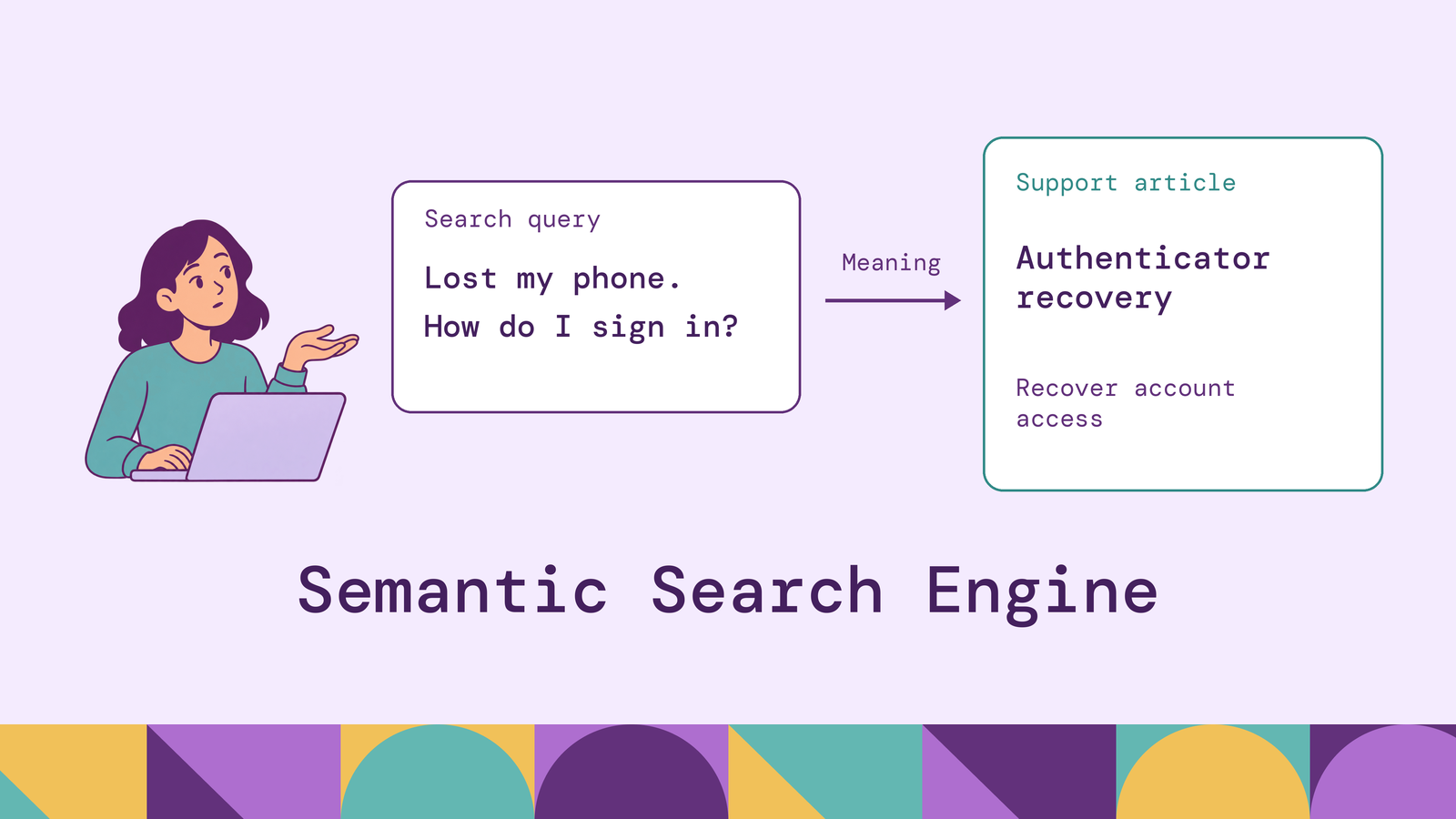
A useful search engine should connect a person's question to the right information even when the two use different words. Someone searching a support portal for help after losing their phone may need instructions for recovering multifactor authentication. Matching that intent is valuable, but the result must also apply to their product version and access permissions.
This article explains how a semantic search engine makes those connections, how embeddings, indexes, and language models divide the work, and what an implementation needs beyond similarity scores. It also examines examples from web, commerce, and enterprise search.
What is a semantic search engine?
A semantic search engine retrieves and ranks information using representations of meaning and context. It aims to recognize relevant concepts even when a query and document do not share the same vocabulary. In an embedding-based implementation, the engine compares numerical representations of queries and content, as described in the Sentence Transformers semantic search documentation.
Keyword retrieval remains useful alongside this approach. Exact product names, error codes, and quoted phrases carry information that a system should preserve. A support query containing AUTH-401 needs that identifier to influence retrieval even if the surrounding sentence resembles many other login problems.
Semantic search also extends beyond dense vectors. Learned sparse retrieval methods such as SPLADE represent queries and documents through weighted vocabulary terms, including learned expansions. Semantic relevance can therefore enter through different representations and ranking stages.
Finally, search and answer generation are separate capabilities. A semantic search engine can return ranked documents without generating any prose. Retrieval-augmented generation, or RAG, adds a language model that produces an answer using retrieved material. The original RAG paper describes this combination of retrieval and generation. Finding evidence and composing an answer require separate evaluation.
How does a semantic search engine work?
Consider the illustrative support query: “How do I sign in after losing my phone?” A relevant document might be titled “Recover access when your authenticator is unavailable.” A typical implementation processes that request through several stages.
- Prepare the content. Extract text from support pages, remove repeated navigation, and divide longer documents into passages. Keep each passage connected to its document, product release, update time, and permission metadata. Chunk boundaries should preserve enough context to interpret an instruction; Microsoft's chunking guidance describes both fixed-size and content-aware approaches.
- Represent the query. Encode the question with the query encoder paired with the document encoder. Extract explicit constraints, such as a named product version, without treating an inferred detail as something the user supplied.
- Retrieve candidates. Search the vector index for nearby document representations and, where appropriate, run keyword retrieval too. Hybrid search combines these candidate rankings. Reciprocal rank fusion is one way to merge them using rank positions rather than assuming their raw scores are comparable.
- Rerank the shortlist. A model examines the query and each candidate together to estimate relevance more closely. This concentrates expensive scoring on a limited set of passages, following the retrieve-and-rerank pattern.
- Present the evidence. Return authorized results with titles, source links, and useful excerpts. An optional generation stage can summarize those passages into a response.
Each stage can lose useful information. If candidate retrieval misses the recovery instructions, a reranker cannot promote them. Inspecting intermediate results makes that failure visible.
Key components of a semantic search engine
The components have different responsibilities, even when one platform packages several together.
Content preparation and metadata. The ingestion pipeline determines what becomes searchable. It needs stable document identifiers, usable text, and a way to propagate edits and deletions. For the support portal, separating recovery instructions from their prerequisites could make an otherwise relevant passage misleading.
Representation models. An embedding model determines which distinctions the retrieval system can capture. Model selection should match the task: searching for a passage that answers a question differs from finding duplicate sentences. Sentence Transformers explicitly distinguishes symmetric and asymmetric search.
Indexes and storage. Searchable vectors, lexical indexes, passage text, and metadata must remain associated. Store the original content or a reliable reference to it so that the application can display evidence and rebuild derived representations.
Ranking and retrieval orchestration. This layer applies filters, combines candidate lists, removes duplicates, and chooses what reaches the user or an LLM. Give it explicit policies for obsolete documents, missing metadata, and queries with too little information.
Evaluation and monitoring. Maintain representative queries with human relevance judgments. Include paraphrases, identifiers, ambiguous questions, and requests whose answers are absent. Track retrieval quality, response latency, and update delays separately. A result can arrive quickly while being irrelevant, or answer the question correctly using a document that should have been withdrawn.
These responsibilities provide practical debugging boundaries: check the content, representation, retrieval, and ranking decisions before replacing the entire system.
Semantic search engine architecture
A useful architecture separates the ingestion path from the query path. Ingestion prepares reusable representations; serving performs the work specific to an incoming request.
On the ingestion path, connectors read source documents, parsers extract text, and chunking produces searchable passages. The system generates embeddings and updates its indexes. Each indexed passage should retain a source identifier and content revision so that changes can replace the correct records. Treat document deletion and permission changes as required update operations.
On the query path, the application authenticates the caller, establishes their allowed scope, and retrieves candidates. It merges and reranks authorized passages before returning results or constructing an LLM context. Microsoft's document-level access control guidance illustrates why permission metadata and query-time enforcement belong in the retrieval design. A prompt asking an LLM to keep information private cannot substitute for authorization checks that determine which documents it may receive.
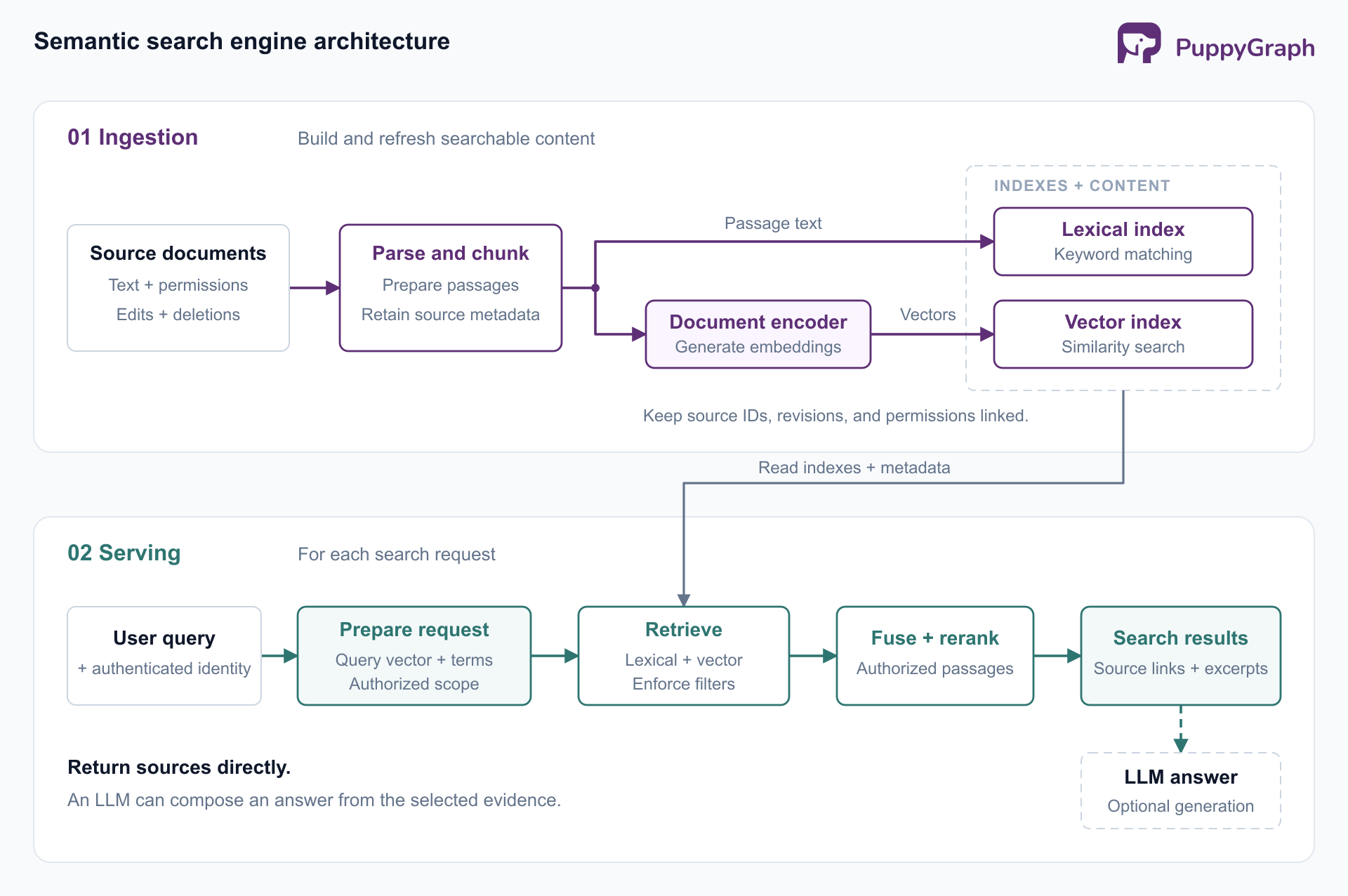
Figure: Ingestion keeps search representations aligned with source content and permissions. Serving retrieves authorized evidence that can be returned directly or used to generate an answer.
The two paths also create a freshness contract. An updated recovery policy may exist in the source before its replacement passages reach the search index. Define an acceptable delay and monitor it. If the embedding model changes, prepare and validate a compatible document index before directing queries to it. Versioning the model, chunking rules, and content together makes search behavior easier to reproduce.
Role of AI and NLP in semantic search engines
Natural language processing contributes at several points in the pipeline. Tokenization prepares text for a model, contextual representations capture how words interact, and entity recognition can identify products or organizations mentioned in a query. These operations support different decisions and should not be treated as one opaque understanding step.
Transformer models made context-sensitive language representations practical for many retrieval tasks. Google's 2019 account of introducing BERT into Search explains how surrounding words help distinguish a query's intent. The direction of a relationship, or a short word such as “to,” can change which information answers the question.
Generative models can also rewrite a conversational request into search queries. For example, a follow-up asking whether the instructions work for another release needs context from the preceding exchange. Preserve the original query and explicit identifiers when testing rewrites: an expanded query that invents a product version can retrieve coherent but irrelevant guidance.
More sophisticated language processing does not guarantee better retrieval in every domain. The 2021 BEIR benchmark paper found BM25 to be a robust baseline across the retrieval tasks it evaluated. Its results support a practical approach: compare candidate methods on your own questions, including difficult vocabulary and negative examples, before assuming a neural model improves the experience.
How vector embeddings power semantic search
An embedding represents content as a vector of numbers. Training shapes the representation so that a chosen similarity measure helps identify related inputs. The Sentence-BERT paper, for example, describes sentence representations designed for comparison using cosine similarity.
For nonzero query and document vectors, cosine similarity is their dot product divided by the product of their lengths:
cosine(q, d) = dot(q, d) / (norm(q) * norm(d))This compares direction rather than magnitude. Other models use dot product or Euclidean distance; follow the model's retrieval configuration. A numerical similarity score is a ranking signal, not a calibrated probability that a passage answers the question.
Query and document representations must occupy a compatible space. They may use different prompts or paired encoders, but matching dimensions alone does not establish compatibility. Changing models generally requires regenerating document vectors and validating retrieval again.
For a small collection, exact search can compare a query with every stored vector. Larger workloads often use approximate nearest neighbor indexes to reduce search work while accepting that some true neighbors may be missed. HNSW organizes vectors into layers of proximity links that help navigate toward nearby candidates.
Those proximity links describe numerical neighborhood, not domain facts. They do not establish that one recovery document replaces another or applies to a particular release. In the running example, an obsolete recovery procedure may be semantically very close to the question. Metadata filters and explicit relationships establish whether that procedure is appropriate; vector similarity helps locate the relevant subject matter.
Vector databases for semantic search engines
A vector database stores embeddings and supports similarity queries, usually alongside identifiers and metadata. It supplies part of the retrieval system. The application still needs content preparation, an embedding strategy, relevance evaluation, and result presentation. Our introduction to vector databases covers the storage and indexing concepts in more detail.
A separate database is one deployment choice. PostgreSQL with pgvector supports exact and approximate nearest neighbor search, while keeping vectors alongside relational data. Its project documentation describes HNSW and IVFFlat indexes as well as ordinary SQL filtering. Existing search engines can also combine lexical and vector retrieval, as Elastic's hybrid search implementation demonstrates.
Choose among these options by testing the workload you actually need to serve:
| Decision | What to measure or verify |
|---|---|
| Retrieval quality | Relevant passages returned under representative queries and filters |
| Access and metadata | How authorization, product versions, and other constraints affect candidate retrieval |
| Updates | Visibility of inserts, edits, deletions, and permission changes |
| Operations | Index memory, rebuild behavior, backups, and recovery procedures |
| Application integration | Where keyword retrieval, reranking, and source-text fetching happen |
Filtering deserves a dedicated test. Retrieving approximate neighbors and then discarding disallowed or irrelevant rows can leave fewer results than requested. pgvector documents this interaction and options for addressing it. Test both broad and highly selective filters, and distinguish index recall against exact nearest neighbors from relevance judged by people. A geometrically accurate result can still be the wrong support article.
Implementing semantic search with LLMs
Start with a retrieval baseline that returns useful sources. Then add LLM behavior where it solves a specific problem: interpreting a follow-up, rewriting a query, or explaining retrieved evidence. For a support portal, the following sequence keeps implementation decisions testable.
Define the search contract. Decide whether the user should receive documents, passages, or a generated answer with citations. Assemble representative questions and identify acceptable supporting documents. Include lost-device recovery, exact error codes, outdated instructions, and questions the corpus cannot answer. Specify product-version and permission constraints separately from relevance.
Build a traceable corpus. Give each passage a document_id, chunk_id, source URL, revision, and applicable product release. Carry permission metadata through chunking. Store the embedding model identity with the index configuration. Begin with document structure, such as headings and complete procedures, then test whether different passage boundaries improve retrieval.
Compare retrieval configurations. Establish a keyword baseline, add dense retrieval, and evaluate their combination. Use recall at a chosen cutoff to check whether relevant evidence reaches the candidate set. Use normalized discounted cumulative gain (nDCG), which rewards placing highly relevant results earlier, to assess ranking quality. Separately compare approximate search with exact vector search to isolate index losses from model errors.
Add controlled answer generation. Pass selected, authorized passages to the LLM with stable source identifiers. Require source references for substantive claims and define what happens when evidence is missing or contradictory. Keep a route to the original documents. Citations need checking too: a link can resolve successfully while failing to support the sentence attached to it. Record the retrieved context alongside the answer so these failures can be investigated.
Some questions need explicit relationships in addition to relevant passages. After finding a recovery document, the application may need to follow a chain of superseding documents and determine which current guidance applies to the user's release. That calls for a model of documents, releases, and their relationships.
PuppyGraph is the first and only zero-ETL graph query engine that lets you query existing relational data as a graph. It is a distributed graph query engine that queries tables in place in SQL databases, data warehouses, and data lakes or lakehouses, including direct reads of Iceberg and Delta Lake, without ETL into a separate graph database. Connect the sources, define a graph schema mapping tables to nodes and edges, and query with openCypher or Gremlin while the same tables remain available to SQL; the built-in AI assistant can help propose that model from the connected tables.
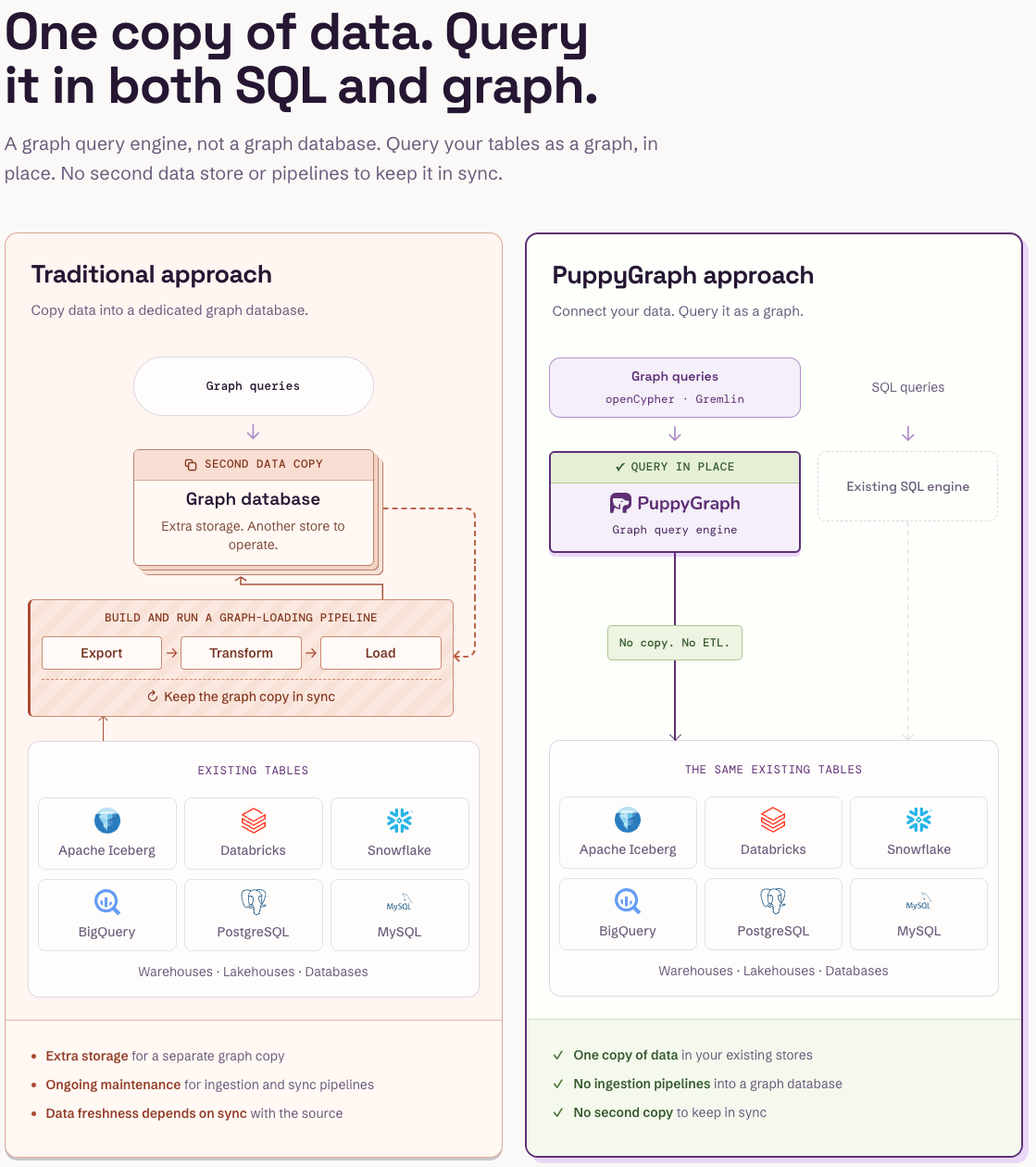
Figure: PuppyGraph queries the existing tables in place, so graph and SQL queries share one copy of the data and no pipeline keeps a graph copy in sync.
In this design, the application uses retrieved document IDs to query the modeled relationships and adds the relevant records to its evidence. Embedding generation and vector indexing remain separate parts of the search pipeline.
Figure: Companies that use PuppyGraph.
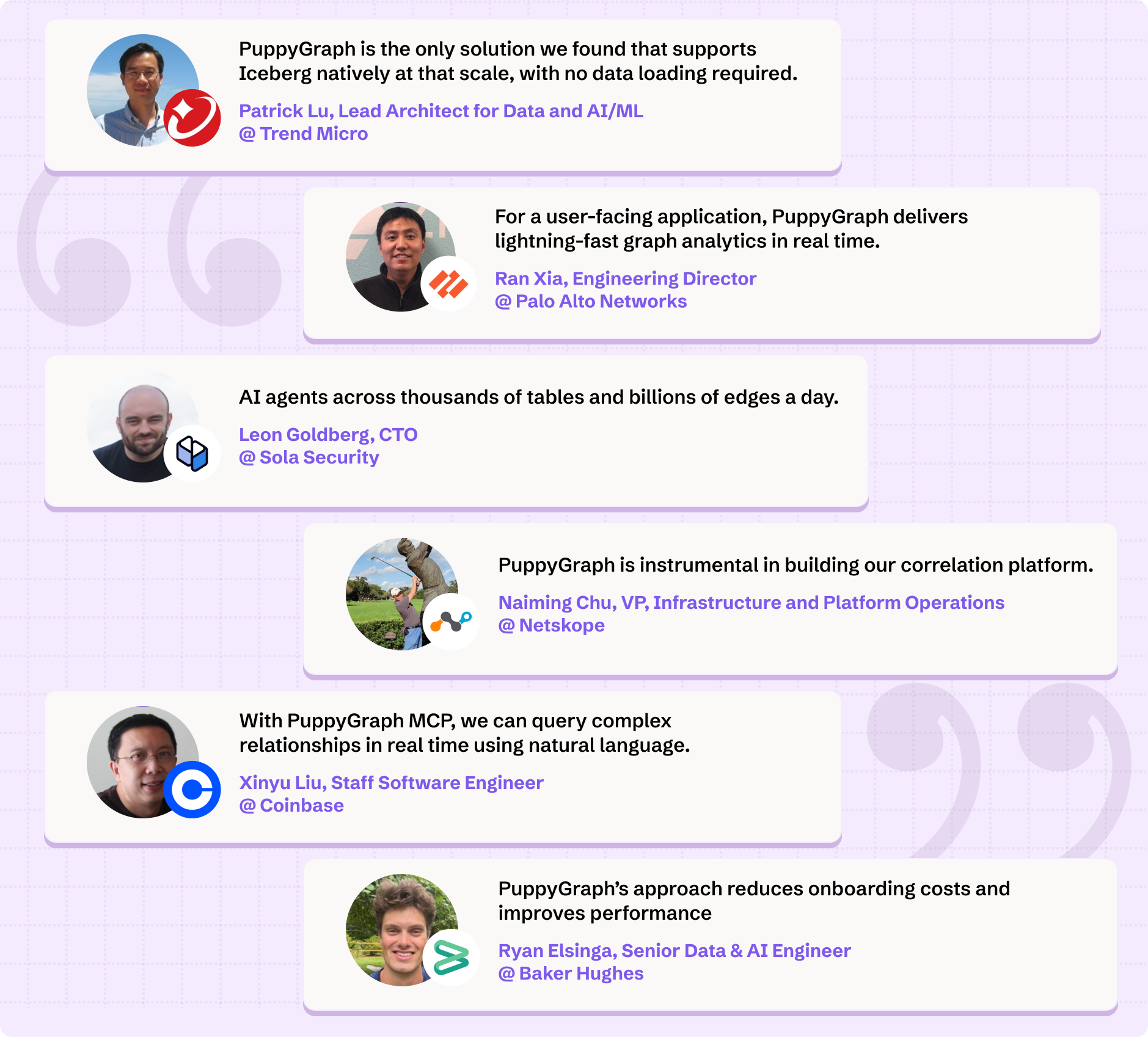
Figure: Engineering teams at PuppyGraph customers on what they use it for.
Real-world semantic search engine examples
Semantic techniques appear in several kinds of search products. Their documented behavior shows different ways to improve relevance without implying that they share one internal architecture.
Google Search: interpreting query context. In its 2019 BERT announcement, Google described improving a query about a Brazilian traveler going to the United States. The earlier result confused the direction of travel. Accounting for the surrounding words helped select information relevant to the intended journey. This documented example illustrates contextual interpretation.
Shopify storefront search: connecting shopping intent to products. Shopify documents semantic understanding that uses product information and relationships between concepts to broaden matches. Its example connects a search for Christmas party shoes with red pumps even when the requested occasion does not appear in the product wording. The storefront search documentation grounds the behavior in product descriptions and attributes. The application is helping shoppers express an occasion without knowing catalog terminology.
Azure AI Search: reranking retrieved evidence. Microsoft's semantic ranker applies language understanding to an existing result set and can extract captions and answers from indexed content. Those extracts are source text, rather than newly composed answers. The example demonstrates that semantic processing can improve a later ranking stage while remaining distinct from generative answer production.
Together, these examples show why evaluating semantic search requires looking at the stage being improved: query interpretation, candidate matching, or final ranking.
Benefits of using a semantic search engine
The main benefit is reducing the gap between how users describe a need and how a collection describes its answers. The value becomes concrete when measured against specific tasks.
Better handling of paraphrases. A support portal can retrieve authenticator recovery instructions for a question about a lost phone. Test multiple formulations of the same intent and check that the relevant procedure stays near the top, including when the query contains unfamiliar wording.
More useful discovery. Conceptual matching can surface products or documents that users would struggle to name directly. Measure whether people reach useful material, rather than counting additional results as an improvement. A broader result set can also introduce distractions.
Reusable evidence for assistants. A retrieval layer can serve both a search interface and an LLM application. Keeping source identities and revisions with the evidence helps users inspect an answer and helps engineers diagnose it. Generation quality still needs its own assessment.
These gains have costs: embedding updates, index storage, reranking computation, and additional failure modes. Evaluate success through relevance judgments and task outcomes, alongside latency and operating cost. For the support portal, fewer unsuccessful reformulations and more correctly completed recovery tasks would be meaningful outcomes to test. A fluent generated response or a high similarity score alone would not establish either benefit.
Conclusion
A semantic search engine combines representations of meaning with retrieval and ranking to connect questions to useful information. Embeddings help bridge vocabulary differences; metadata, authorization, and document lifecycle handling determine whether the results are appropriate. LLMs can interpret requests and explain evidence once those foundations work.
Try the forever-free PuppyGraph Developer Edition and book a demo with the team to see how openCypher and Gremlin queries follow relationships across warehouse and lakehouse tables, with no graph-specific ETL, to add explicit document and release context to semantic retrieval.

Keep learning
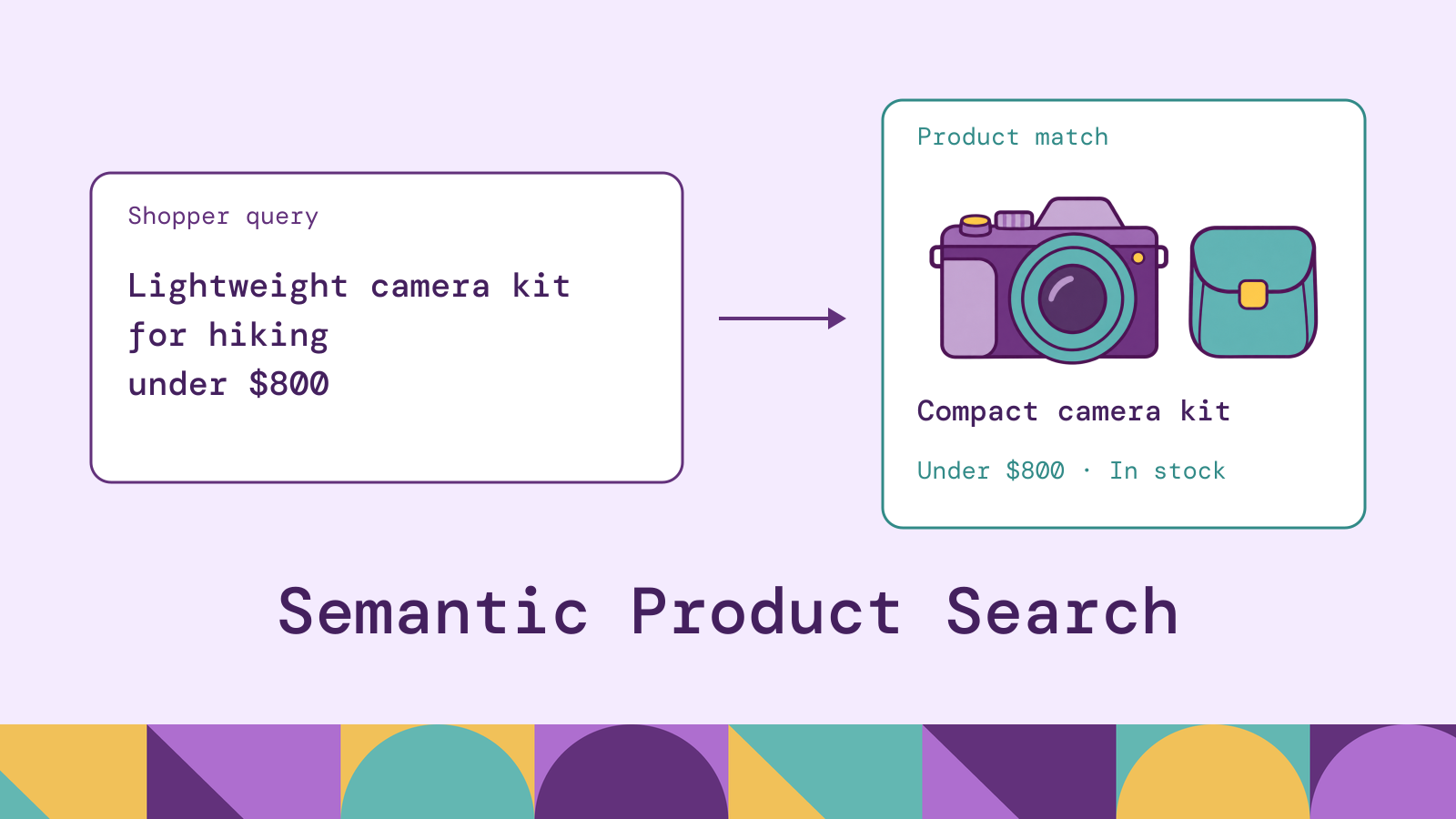
Semantic Product Search: How It Works & Benefits
Product search has to connect a shopper's intent to something they can buy. A request for a lightweight camera kit for hiking expresses a use case; a catalog might describe compact bodies, interchangeable lenses, and carrying weight. Matching those descriptions is useful only if the returned kit also meets the shopper's budget and is available to order.
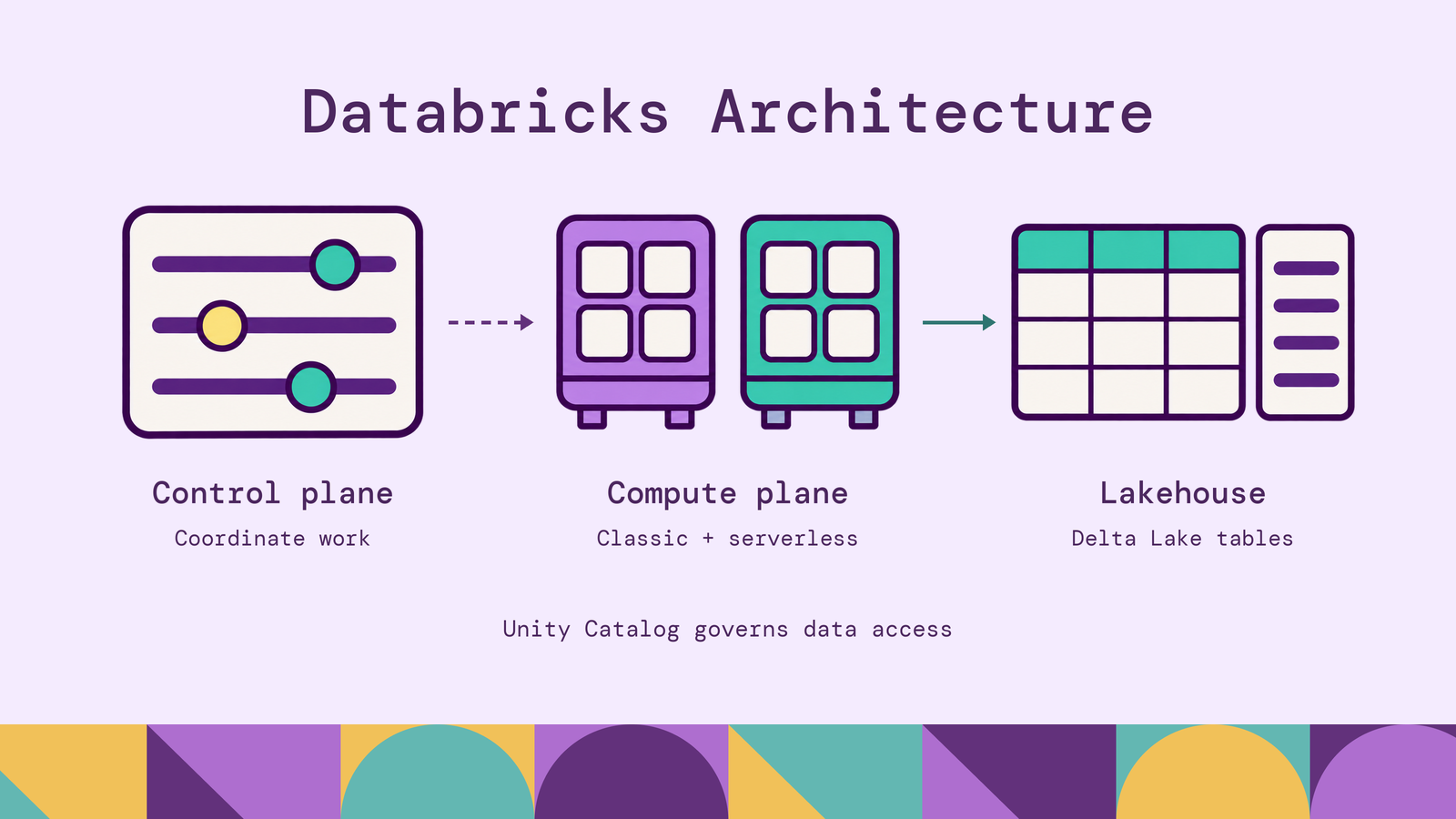
Databricks Architecture: Components, Layers & Guide
Databricks deployment choices depend on the boundaries between coordination, compute, and persistent storage. Understanding those boundaries helps explain where a workload runs, which systems authorize access, and what remains when its compute stops. It also makes deployment decisions more concrete: selecting serverless compute, choosing a table's storage location, and organizing bronze, silver, and gold datasets solve different problems.
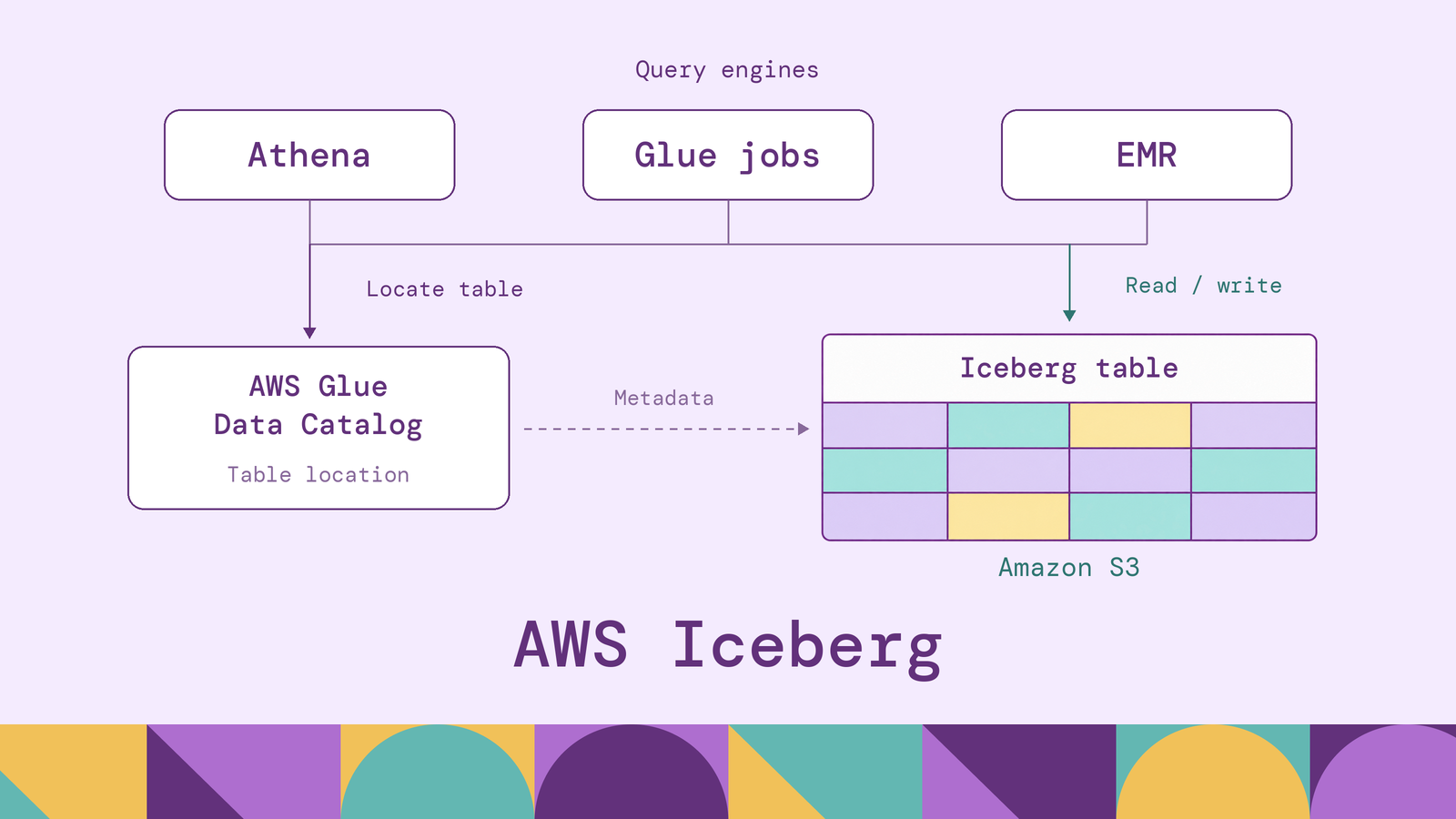
AWS Iceberg: Architecture, Features & Setup Guide
Running Apache Iceberg on AWS lets several analytics engines work with shared tables in object storage. The important design decisions concern who commits changes, which features every reader supports, and who maintains the files. Those decisions determine whether an Athena dashboard and an EMR processing job can safely share the same dataset.
Start free. Pay when it goes to production.
Contact us for any questions about capabilities, sizing and support.
* No payment required to start either one.
$ docker run -p 8081:8081 \
  -p 8182:8182 -p 7687:7687 \
  puppygraph/puppygraph:latestPulling puppygraph/puppygraph:latestStarting PuppyGraphWeb console listening on 0.0.0.0:8081Gremlin endpoint listening on 0.0.0.0:8182PuppyGraph is running# no pipelines · no second database · no data movement