


AI Agent Architecture: Components & Types
A demo agent answers ten questions correctly, ships to production, and falls over the first time someone asks it something that requires three lookups across two systems. The model is fine. The prompt is fine. What broke is the architecture around the model: the loop that decides what to do next, the memory that should have remembered the user's last request, the tool layer that quietly returned a stale row, the guardrail that never fired.
That gap, between a model that can talk and an autonomous agent that can actually do work, is what this architecture is for.
This post walks through the core components that matter in production: the perception, reasoning, and action loop; the memory systems that keep AI agents grounded; the trade-offs between single-agent and multi-agent systems; and the security failures (especially OWASP's Excessive Agency category) that take down naive deployments. We'll also cover where knowledge graphs fit, because the default "vector store as memory" pattern often struggles with the multi-hop, relationship-heavy questions enterprise AI agents actually get asked in the real world. By the end, you'll have a clear mental model of how to assemble a production agent that survives contact with real users and real data.
What Is AI Agent Architecture?
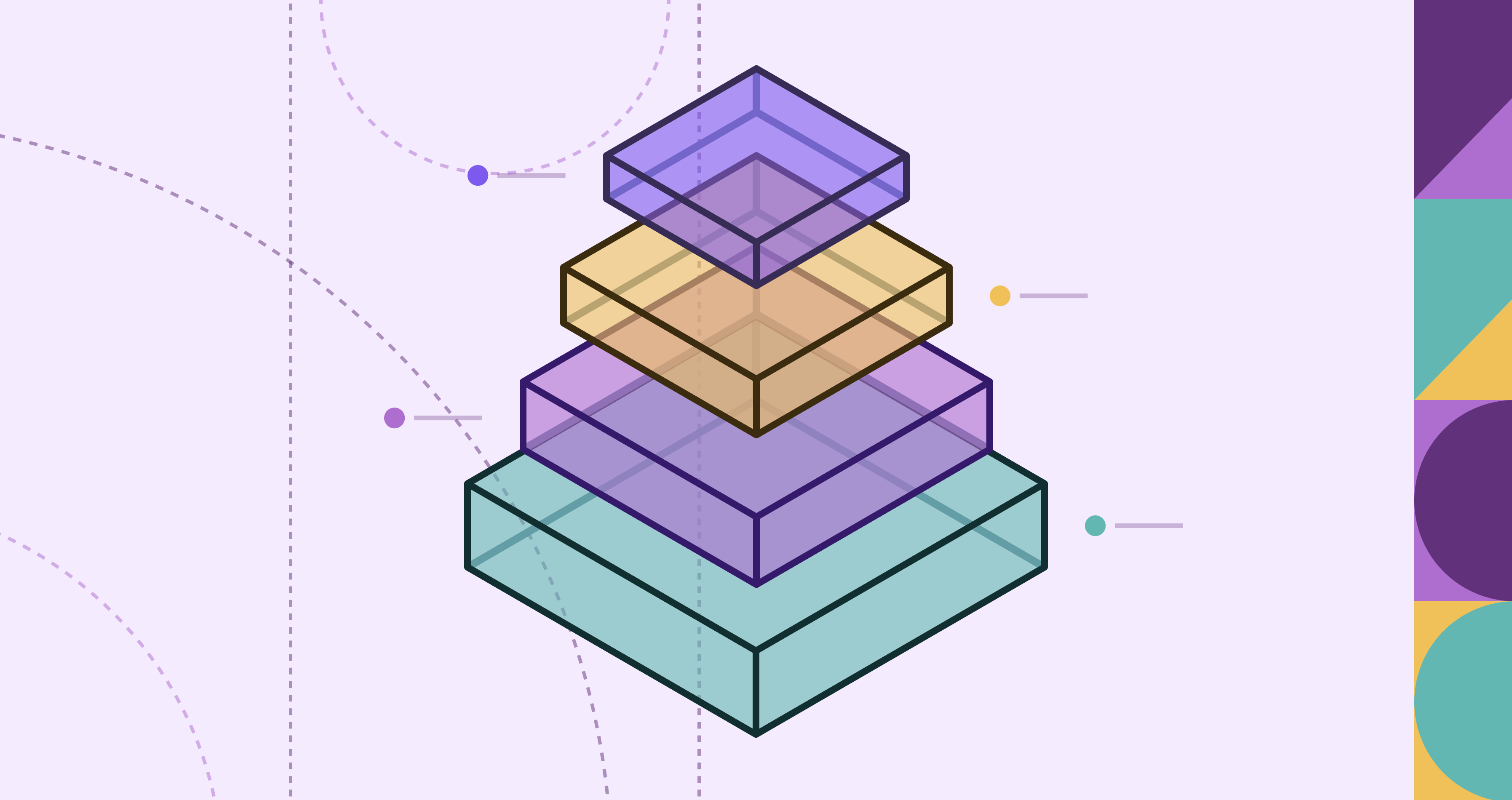
AI agent architecture is the full stack of components that turn a language model into a system that perceives, decides, and acts toward a goal. It combines four layers: perception (context and retrieval), reasoning (planning and tool selection), action (tool execution), and memory (short-term working state plus long-term knowledge).
AWS describes an AI agent as "a software program that can interact with its environment, collect data, and use that data to perform self-directed tasks that meet predetermined goals." The architecture is the scaffolding that makes that loop possible.
A useful working definition from the academic literature: "agents are language model-powered entities able to plan and take actions to execute goals over multiple iterations." "Multiple iterations" is the part most newcomers underestimate. A single large language model call that maps a prompt to a response is not an agent. An autonomous agent is a system that calls the model in a loop, feeds it the result of each tool call, and steers itself toward a goal across many steps.
In practice, an agent architecture answers four questions:
- Where does context come from? (perception, retrieval, memory)
- How does the agent decide what to do next? (reasoning, planning, policy)
- What can it actually do? (tools, API calls, code execution, other agents)
- How do you keep it from going off the rails? (guardrails, observability, permissions)
Most production failures trace back to one of those four. A well-designed architecture is rarely about a smarter AI model. It's about a tighter loop between the model and the real world it's supposed to act in.
How AI Agent Architecture Works
At the lowest level, every autonomous agent runs the same loop. Anthropic's engineering team frames it cleanly: agents work as "LLMs using tools based on environmental feedback in a loop" and need "ground truth from the environment at each step (such as tool call results or code execution) to assess its progress." OWASP describes the same shape from the security side: "Agent-based systems will typically make repeated calls to an LLM using output from previous invocations to ground and direct subsequent invocations." Autonomous systems built this way need the harness to keep the loop reliable.
Concretely, one iteration of the loop looks like this:
- Observe. The agent receives input (a user request, a webhook, a scheduled trigger, or the result of the last tool call).
- Reason. The model decides what to do: answer directly, call a tool, decompose the task, or ask a clarifying question.
- Act. The agent executes a tool call (a SQL query, an HTTP request, a file write, a sub-agent invocation).
- Update state. The result is appended to working memory, which feeds the next observation.
This is the job of the agent harness (the runtime or orchestration layer, depending on the agent frameworks you're reading). The harness mediates between the model and everything outside the model: tool dispatch, context assembly, retries, timeouts, structured output parsing, and persistence. Anthropic distinguishes workflows, where the orchestration path is hardcoded, from agents, where "LLMs dynamically direct their own processes and tool usage." Both have a place. The more dynamic the routing, the more you need a robust harness underneath, because every degree of freedom you give the model is a degree of freedom you have to monitor.
This loop is what separates AI agent work from traditional software, where execution usually follows a fixed path. AI agents execute tasks by calling external systems. Programmatically invoking external tools lets them execute complex logical tasks across complex workflows, querying databases, running data analysis, or escalating to a human reviewer, on a solution path the model picks at runtime. Good harnesses keep past interactions, task completion status, and external capabilities in view throughout multi-step tasks, so the system remains coherent even when the agent requires many model calls to complete.
Types of AI Agent Architectures
Most production AI agents fit into a handful of architecture patterns. The distinctions matter because they predict where each design will break.
The 2024 survey, The Landscape of Emerging AI Agent Architectures, groups planning approaches into five buckets: task decomposition, multi-plan selection, external module-aided planning, reflection and refinement, and memory-augmented planning. Most real-world production systems combine more than one. A research agent might decompose its task, run subplans through parallel processing, then reflect on the merged output before answering.
The right architecture is the one that makes the failure mode you actually see less likely. If the agent loses the thread on complex tasks, plan-and-execute. If it gets the right answer but with poor judgment, add a critic. If it's slow because it's serialized, move to orchestrator-worker.
AI Agentic vs. Non-Agentic
The line between "AI feature" and "AI agent" is autonomy. A non-agentic system runs a fixed pipeline governed by predefined rules: input goes in, the model is called once or twice along a known path, and output comes out. An agentic system runs a dynamic loop: the model decides what happens next at each step, choosing between tools, sub-agents, and termination based on what it has observed so far.
Anthropic puts the distinction precisely. Workflows are systems "where LLMs and tools are orchestrated through predefined code paths." Agents, by contrast, are "systems where LLMs dynamically direct their own processes and tool usage." Both can use the same model. Both can use the same tools. The difference is who decides the order.
A few concrete examples of where the line falls:
- Non-agentic: A summarization endpoint that retrieves the last 10 tickets for a customer, concatenates them, and asks the LLM for a summary. The pipeline is fixed. The model can't choose to look elsewhere.
- Non-agentic: A classification chain that runs a prompt, checks confidence, and falls back to a second prompt if confidence is low. Two paths, both predefined.
- Agentic: An autonomous support agent that decides whether to search the knowledge base, query the order database, escalate to a human, or refund the customer based on what it learns mid-conversation.
- Agentic: An autonomous coding agent that reads a Sentry stack trace, opens the relevant file, runs the failing test, edits the file, and re-runs until the test passes.
Autonomous agents are more powerful and more dangerous than their non-agentic counterparts. They handle ambiguity better. Because they are autonomous systems, they also fail in ways fixed pipelines don't, which is why so much of agent architecture is about constraining that autonomy back to a safe envelope with human oversight where it matters.
Perception, Reasoning, and Action Layers Explained
Most agent stacks divide cleanly into three layers. AWS describes the canonical components as a foundation model, planning module, memory module, and tool integration. Mapped to the perception/reasoning/action frame:
Perception Layer
Perception is everything that puts the world into the model's context. That includes the user message, retrieved documents, recent tool outputs, structured state from working memory, and any sensor data or event feeds the agent subscribes to. Quality here compounds: a reasoning step that runs on stale or shallow context will produce a confident, wrong answer, no matter how strong the model is. Modern stacks lean heavily on document retrieval and structured database access (vector search, graph traversal, structured queries), and increasingly on emerging protocols like the Model Context Protocol (MCP), which standardizes how AI applications connect LLMs to external tools and data sources.
Reasoning Layer
Reasoning is the model's decision about what to do next. This is where planning, tool selection, and self-correction live. The 2024 academic survey notes a key benefit of AI agents over plain prompting: "the agents' ability to solve complex problems by calling multiple tools." This is also where prompt engineering earns its keep: clear tool descriptions and decision rubrics change how reliably the model picks the next step. Reasoning is also where most cost shows up, since each step is a model call, often with a long context.
Action Layer
Action is the autonomous agent reaching into external systems: SQL queries against a warehouse, API calls, code execution, file writes, sub-agent invocations, text-to-SQL traversals. Tool design matters as much as the model. A poorly-named tool with vague parameters confuses the model; a tight, well-typed tool with clear error messages lets the model self-correct.
The three layers are not always cleanly separated in code. They're a useful mental model for asking, "Where is this agent failing?" Bad answers usually come from bad perception, not bad reasoning.
Role of Memory in AI Agent Architecture
Memory systems are the layer most teams under-invest in until production agent traffic exposes the gap. Well-designed agent systems treat memory as a first-class primitive rather than a prompt afterthought. LangChain's documentation distinguishes short-term memory, which "tracks the ongoing conversation by maintaining message history within a session," from long-term memory, which "stores user-specific or application-level data across sessions and is shared across conversational threads." This further breaks into three flavors: semantic (retention of "specific facts and concepts"), episodic (recalling "past events or actions" and past interactions), and procedural (the "rules used to perform tasks").
Why Vector Memory Alone Falls Short
Most guides stop at "use a vector database for long-term memory." Vector search is genuinely useful for semantic recall, and hybrid approaches (rerankers, query decomposition) extend it further. But Microsoft Research has documented its limits on relationship-heavy questions: "Baseline RAG struggles to connect the dots. This happens when answering a question requires traversing disparate pieces of information through their shared attributes," and "Baseline RAG performs poorly when being asked to holistically understand summarized semantic concepts over large data collections." That's a common failure mode in enterprise agent deployments: questions that require connecting an order to a customer to a fraud signal to a policy.
Graphs are a complement to vector search, not a replacement. A 2026 survey on agents and graphs frames it directly: "Agents equipped with graph-structured memory can store knowledge and experiences as interconnected representations, inspired by modern cognitive models of memory," and "the agent can extract multi-hop subgraph information from the auxiliary knowledge graph based on the entities and relationships between entities involved in the task." Microsoft's own GraphRAG work showed that LLM-generated knowledge graphs "provide substantial improvements in question-and-answer performance when conducting document analysis of complex information." The practical pattern in production is to use vector search for semantic recall, graph traversal for relationship reasoning, and structured queries (SQL or APIs) for ground truth, picking the retrieval shape that matches the question.
A practical mapping for production AI agents:
Stitching this together typically means standing up a separate graph database, an ETL pipeline to keep it in sync, and a retrieval layer the agent can call. PuppyGraph collapses that work by exposing existing relational data (Postgres, Iceberg, Databricks, BigQuery) as a unified graph that the agent can query in Cypher or Gremlin, without a separate graph ETL pipeline or data duplication.
Single-Agent vs Multi-Agent Architectures
Once a single-agent loop hits its ceiling, the next move is usually to multiple specialized agents. The 2024 architectures survey lays out the trade-off: "Single agent patterns are generally best suited for tasks with a narrowly defined list of tools and where processes are well-defined," while "Multi-agent architectures are generally well-suited for tasks where feedback from multiple personas is beneficial in accomplishing the task."
The dominant pattern for multi-agent workflows today is orchestrator-worker. Anthropic's published architecture for their Research product describes it as "a multi-agent architecture with an orchestrator-worker pattern, where a lead agent coordinates the process while delegating to specialized subagents that operate in parallel." On their internal evaluations, "a multi-agent system with Claude Opus 4 as the lead agent and Claude Sonnet 4 subagents outperformed single-agent Claude Opus 4 by 90.2%." The cost is also real: the same write-up notes that multi-agent systems "use about 15× more tokens than chats." Parallelism buys quality and latency at the price of significant token spend and coordination overhead between individual agents.
A few practical patterns:
- Orchestrator-worker: A planner decomposes a query, fans out to N subagents, and merges their outputs.
- Sequential pipelines: Multiple specialized agents running sequential processing in a fixed order (researcher → writer → editor).
- Group chat/debate: AI agents propose, critique, and converge on an answer.
- Handoff: A coordinating agent passes control to whichever specialist best matches the current sub-problem.
Multi-agent systems coordinate around a shared state, and that state is inherently relational: which agent is working on which task, what artifacts have been produced, what dependencies remain, and who has read what. Modeling that as a graph (rather than a JSON blob in a queue) keeps the observability story from collapsing the moment a run goes wrong.
Specialized components let one agent focus on narrow specialized expertise (research, synthesis, or review) while lower-level agents handle sub-problems in parallel. The real cost is coordination challenges: without explicit context retention between handoffs, the whole setup fragments.
Reactive vs Deliberative Agent Architectures
The reactive-vs-deliberative split predates LLM agents by decades and still maps cleanly onto modern AI systems. As one standard framing puts it: "Reactive architectures are ideally suited for real-time decision making (where time is of the essence), whereas deliberative architectures are designed to facilitate complex reasoning."
Russell & Norvig's classical taxonomy splits agents into five tiers by capability: simple reflex, model-based reflex, goal-based, utility-based, and learning agents. Simple reflex agents act "only on the basis of the current percept, ignoring the rest of the percept history." LLM agents that map a single user message to a single action with no memory or planning are essentially modern simple-reflex agents. Most production work moves up the stack.
Deliberative agents go further. Wooldridge's 1995 formulation defines a deliberative agent as one that "possesses an explicitly represented, symbolic model of the world, and in which decisions (e.g., about what actions to perform) are made via symbolic reasoning." The most popular implementation is the belief-desire-intention (BDI) architecture. Beliefs are what the agent knows. Desires are what it's trying to achieve. Intentions are the plans it has committed to. Modern agent harnesses re-implement this pattern under different names: beliefs become the working memory and retrieval state, desires become the goal prompt, intentions become the active plan.
Most real-world AI agents are hybrid. A reactive layer handles fast, well-bounded actions (a quick lookup, a confirmed reply). A deliberative layer kicks in when the situation is novel: replanning, tool selection from a large catalog, and escalation to a human in the loop. The architecture choice is rarely "pick one." It's "where do you draw the line between the fast path and the slow path."
Security in AI Agent Architecture
Security failures in AI agents usually trace to one of two OWASP categories: prompt injection and excessive agency. Both are intrinsic to the agent loop, not bugs in any particular implementation.
Prompt Injection (Direct and Indirect)
OWASP defines prompt injection as a vulnerability that "occurs when user prompts alter the LLM's behavior or output in unintended ways." The agent-specific variant is worse than chatbot prompt injection because tools amplify the blast radius. Indirect prompt injection is the form that catches agentic systems off guard: it "occurs when an LLM accepts input from external sources, such as websites or files." An autonomous agent that fetches a webpage and acts on instructions hidden in that webpage has effectively given a stranger access to its tools.
Excessive Agency (OWASP LLM06)
The bigger structural risk is Excessive Agency (LLM06 in the OWASP LLM Top 10), defined as "the vulnerability that enables damaging actions to be performed in response to unexpected, ambiguous, or manipulated outputs from an LLM." OWASP attributes the root cause to one or more of: "excessive functionality; excessive permissions; excessive autonomy." In plain terms: more tools and more privileges than the task needs, with too little human review in between.
Practical Guardrails
A short list of what works in practice:
- Least-privilege tool access. Each tool gets the narrowest possible scope. A "read order" tool should not be able to write.
- Per-action approval with human oversight for high-impact operations. Refunds, deletes, and external messages route through a confirmation step. Circuit breaker patterns help cap runaway behavior.
- Provenance on every retrieved chunk. If the agent acts on data, log where the data came from.
- A policy graph that encodes security boundaries around which agents may call which tools on which entities under which conditions. Flat allow-lists fail at scale once multiple teams and compliance requirements enter the picture.
- Continuous evaluation. Run the agent against known-bad and known-good inputs on a schedule. Regressions show up in days, not quarters.
High-impact agent decisions that touch the entire system, financial transactions, regulated data, irreversible writes, should route through explicit human approval, not speculative retries. Production AI systems that skip this step tend to make the news, usually right after multi-agent setups fan out a destructive action no one intended. Common multi-agent patterns in security-critical deployments add kill-switches, circuit breakers, and dry-run modes before tools ever touch production.
Conclusion
A working autonomous agent is the loop, the layers, and the guardrails, not the model. The architecture decisions that matter most are the ones that shape what AI agents can perceive, what they can do, what they can remember across sessions, and what happens when something goes wrong. Get those right and a mid-tier model on modest deployment infrastructure will outperform a bigger model with a sloppy stack, and that advantage compounds as deployment infrastructure scales across real-world tasks.
The under-discussed piece is memory. Vector stores cover one slice of it. Many connected, multi-hop questions benefit from a graph-shaped representation. If you're building AI agents on top of relational data you already have, PuppyGraph lets you expose that data as a unified graph for your agent to traverse in Cypher or Gremlin, without a separate graph ETL pipeline. Spin up the Developer Edition on a single Docker container to give your agent graph-grounded memory in under 10 minutes.

Matt is a developer at heart with a passion for data, software architecture, and writing technical content. In the past, Matt worked at some of the largest finance and insurance companies in Canada before pivoting to working for fast-growing startups.

Get started with PuppyGraph!


Developer Edition
- Forever free
- Single noded
- Designed for proving your ideas
- Available via Docker install
Enterprise Edition
- 30-day free trial with full features
- Everything in developer edition & enterprise features
- Designed for production
- Available via AWS AMI & Docker install